Bedroom Wall Art
Photography prints chosen for the room where the day ends
Bedroom wall art works best when it gives the eye somewhere to rest rather than something to read. The eight photographs on this page are the ones from my collection I would hang above a bed: soft horizons, fog, and sea and sky reduced to bands of colour. Each is printed to order on fine art paper, aluminium dibond or acrylic, in sizes from 40 × 60 cm to 100 × 150 cm, and shipped worldwide.
Why a bedroom asks something different of a picture
A living room picture can afford to be loud. People pass it, talk in front of it, look at it for a moment and move on. A bedroom picture gets looked at in a different way: from a pillow, in low light, at the two ends of the day when nobody wants to be asked anything. It is the last thing seen before the lamp goes off and the first thing seen with the curtains still drawn.
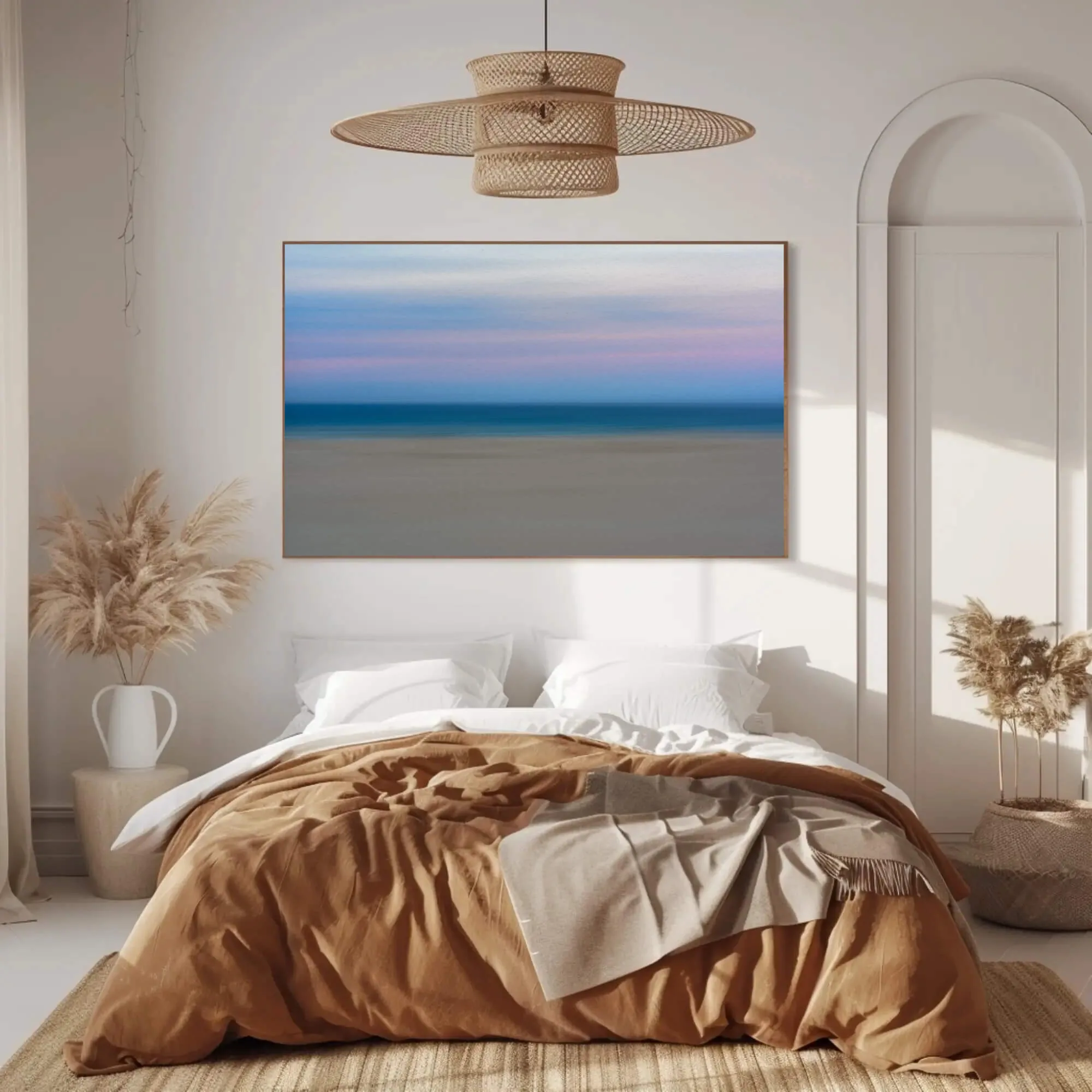
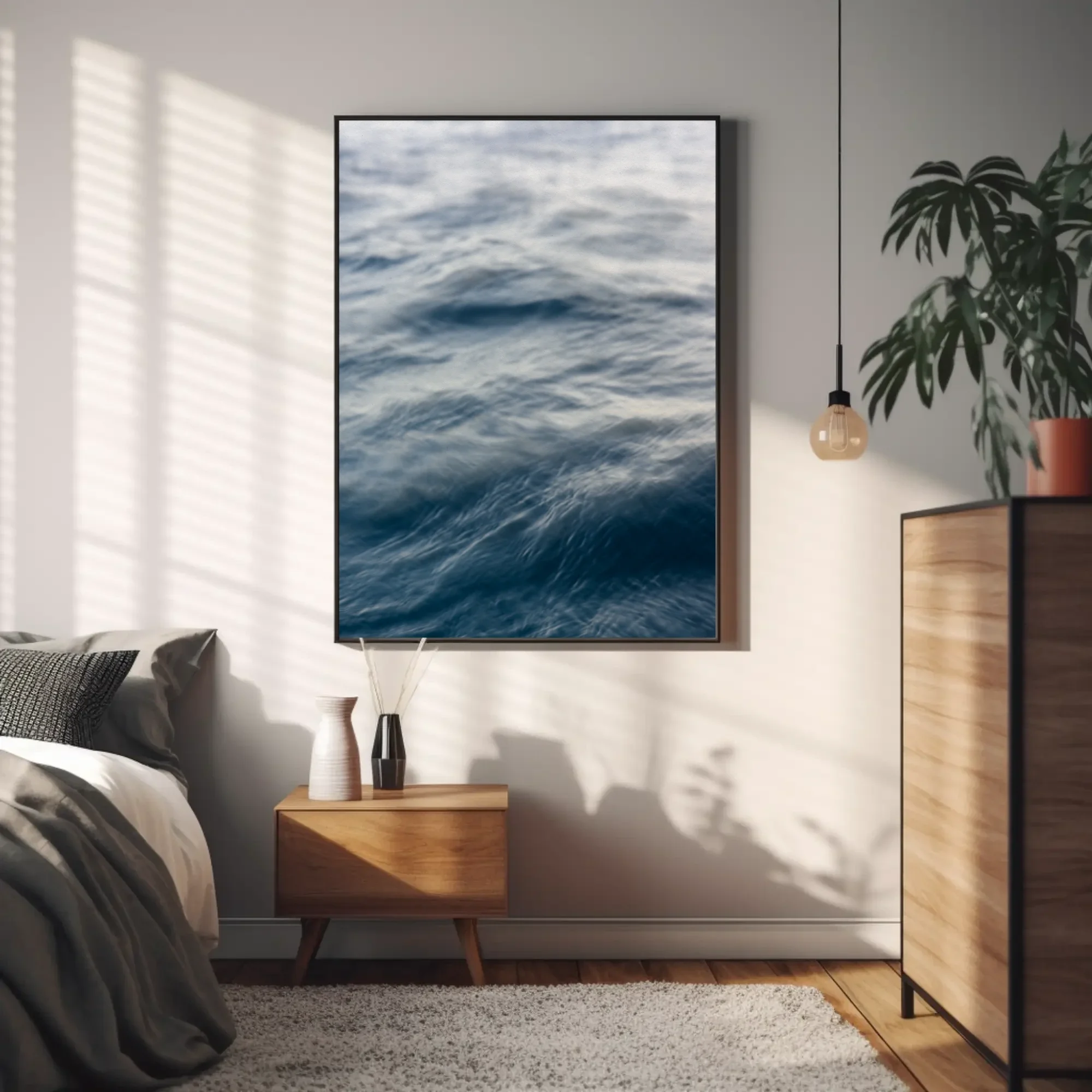
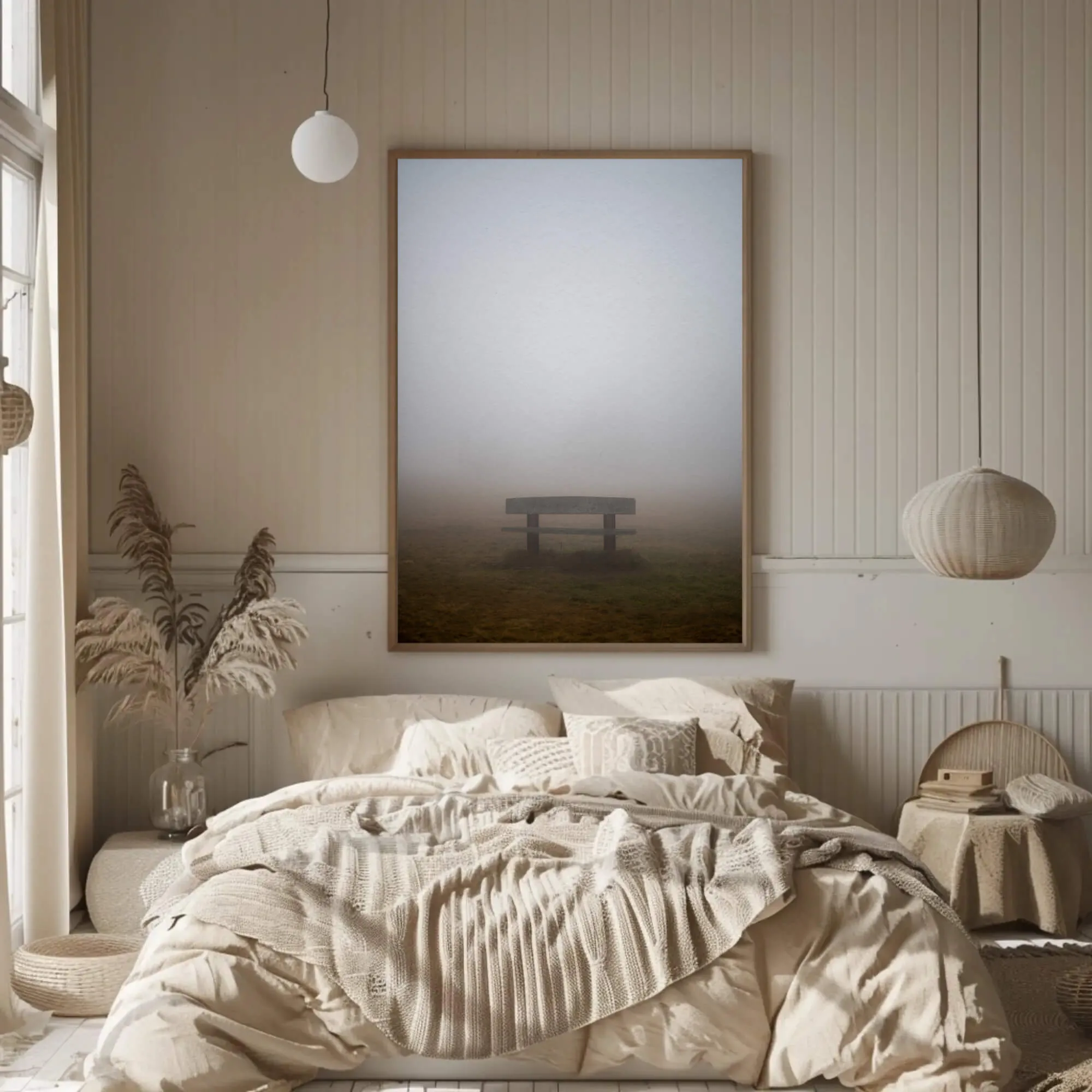
That changes what the image has to do. Detail becomes a liability. A photograph with a clear subject, a face, a street, a horizon you can name, keeps the mind working out what it is looking at. The photographs on this page are built the other way. Most of them were made with the camera moving during a long exposure, so sea, sky and fog dissolve into bands of colour with no edge to catch on. Adrift I has no ground in it at all. Rest is a bench and a field, but the fog takes most of both away. The image sits on the wall like weather rather than like a scene, and weather is easy to fall asleep in front of.
How big should art above the bed be, and how high?
Start from the bed, not from the wall. A print above a headboard should be about two-thirds to three-quarters of the bed's width. Above a 160 cm double, that means a print between 100 and 120 cm wide, so a 100 × 150 cm landscape print, hung as 150 × 100, is the natural fit. Above a 140 cm bed, 120 × 80 works. Anything narrower than half the bed looks like it was hung for a different piece of furniture.
Height is where most bedroom art goes wrong. The centre of the picture should sit around 145 to 150 cm from the floor, the usual eye level for a standing adult, but a headboard changes the rule: leave 15 to 25 cm between the top of the headboard and the bottom of the print. Any less and the two read as one object. Any more and the print floats off on its own.
Orientation follows the furniture. A bed is a wide, low, horizontal shape, and a horizontal print continues it. Raya was made for this: sand, sea and sky in three flat bands, wider than tall. Portrait prints work on the walls beside the bed, above a chest of drawers, or on the wall you face from the pillow, where a tall image like Rest or Gradient I has room to stand. Every format is listed in centimetres and inches in the print sizes guide. If you're unsure, send me a photo of the wall and I'll tell you what size I would hang.
Eight prints from the collection that belong in a bedroom
These are the pieces I would put in a bedroom, and why. Each links to its own page with the full story, the palette, and prices by size. The mockups show the print in a bedroom so you can judge the scale.
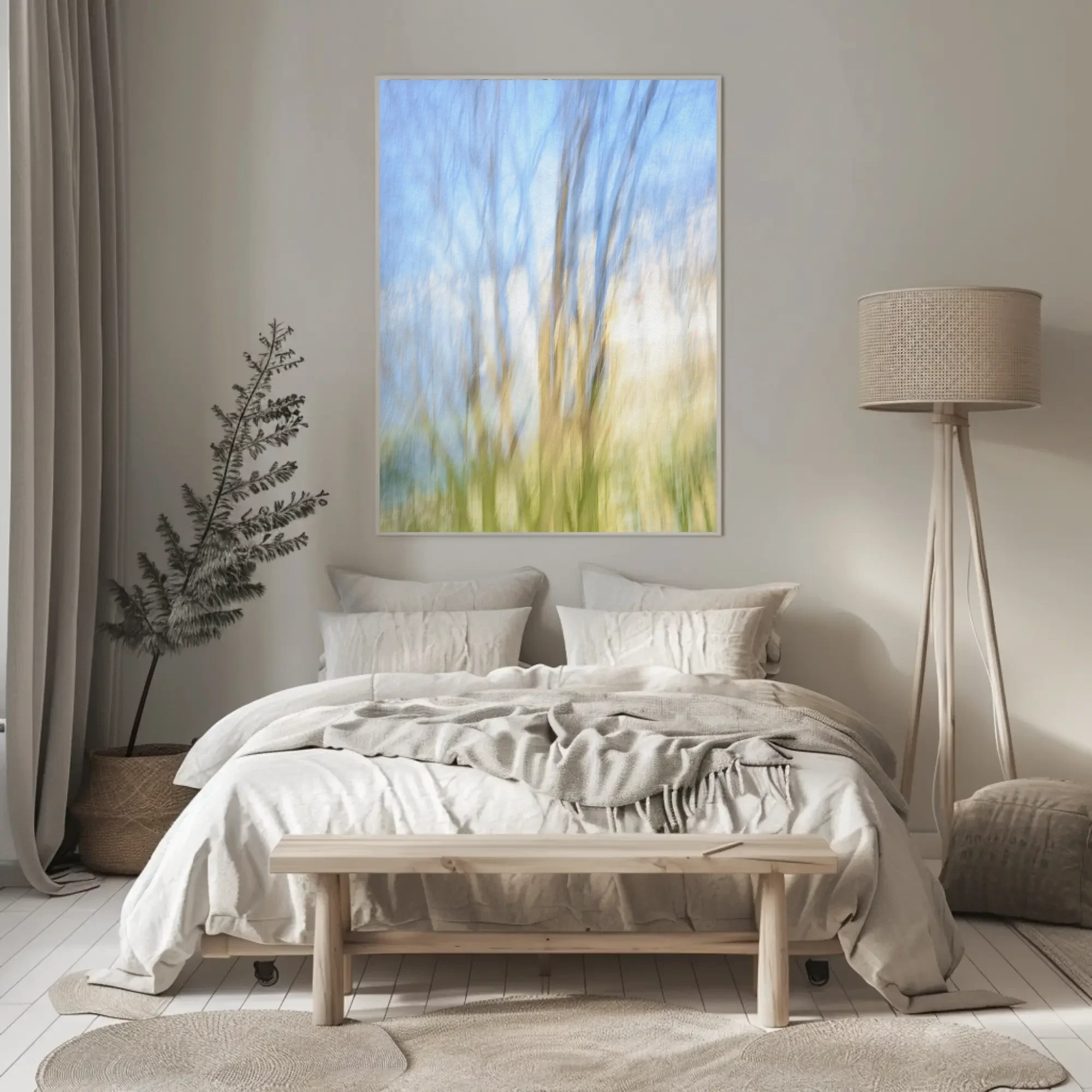
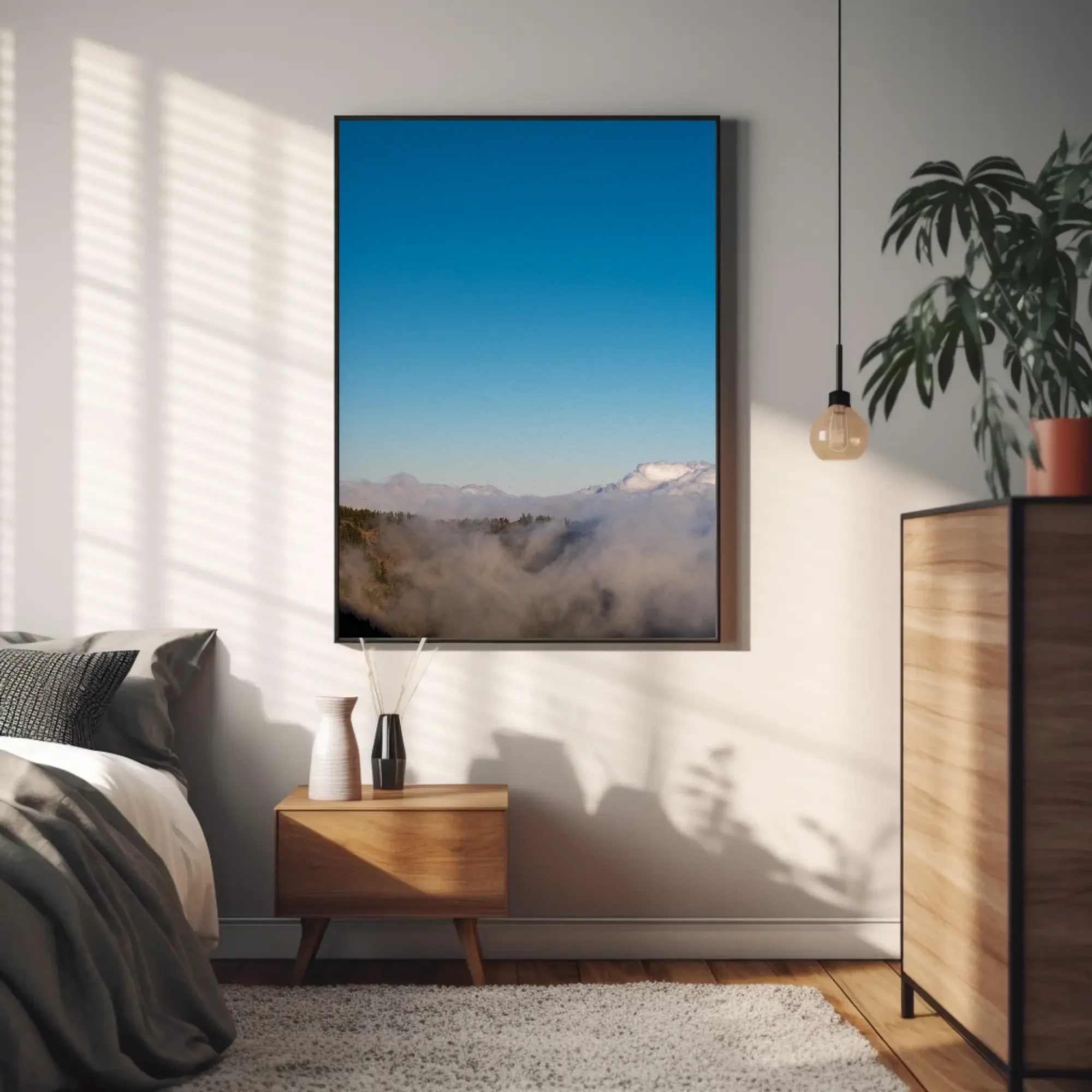
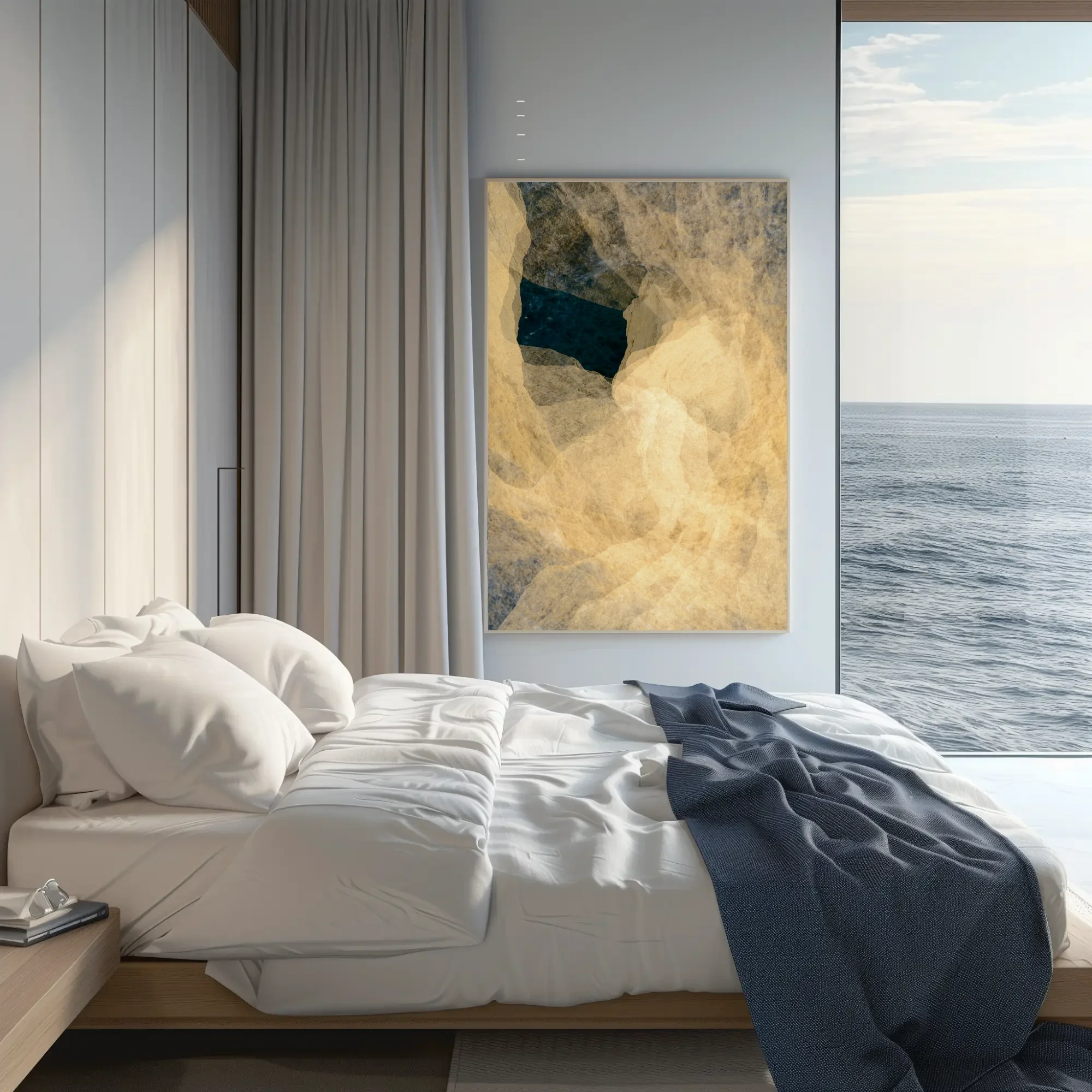
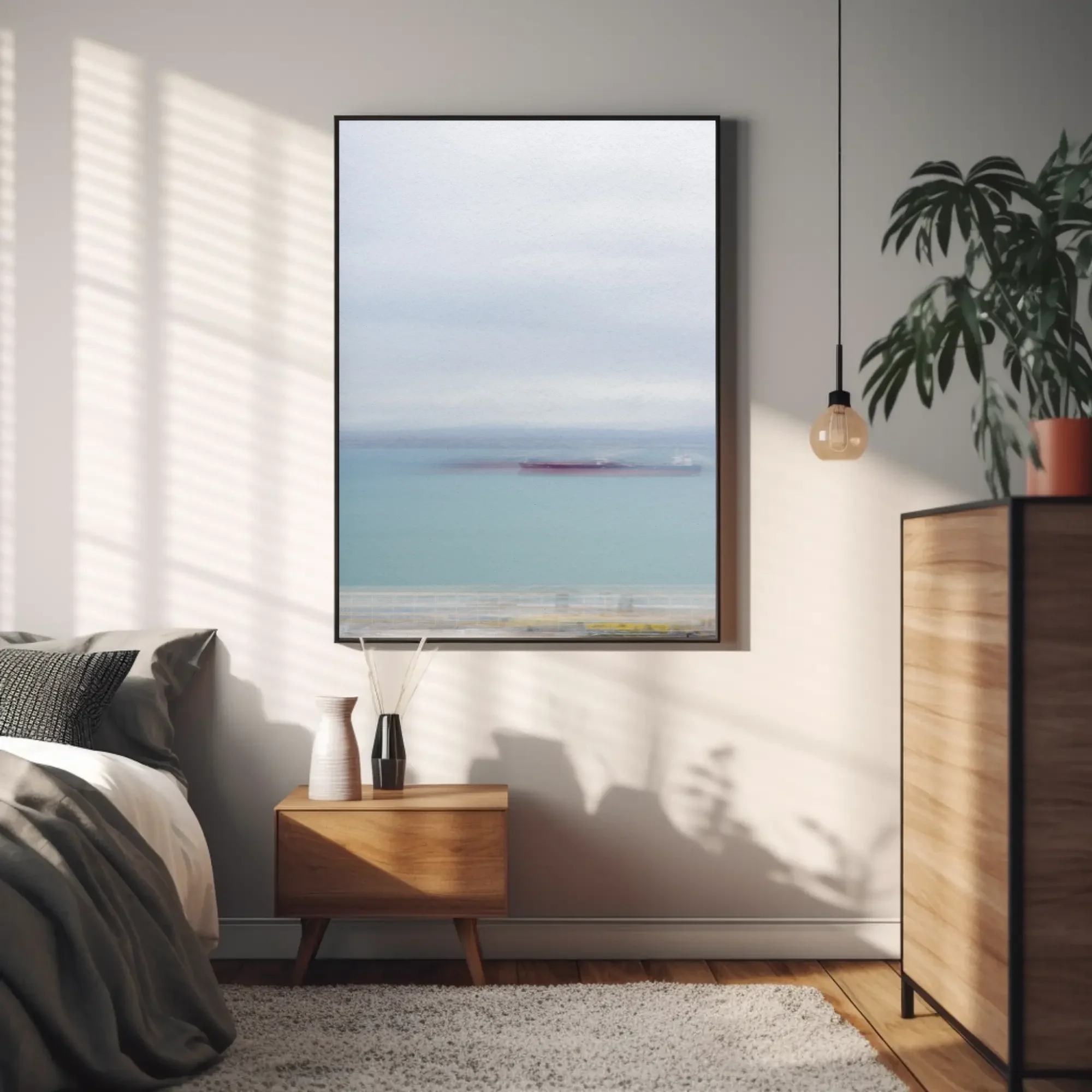
Which colours settle a bedroom, and which don't?
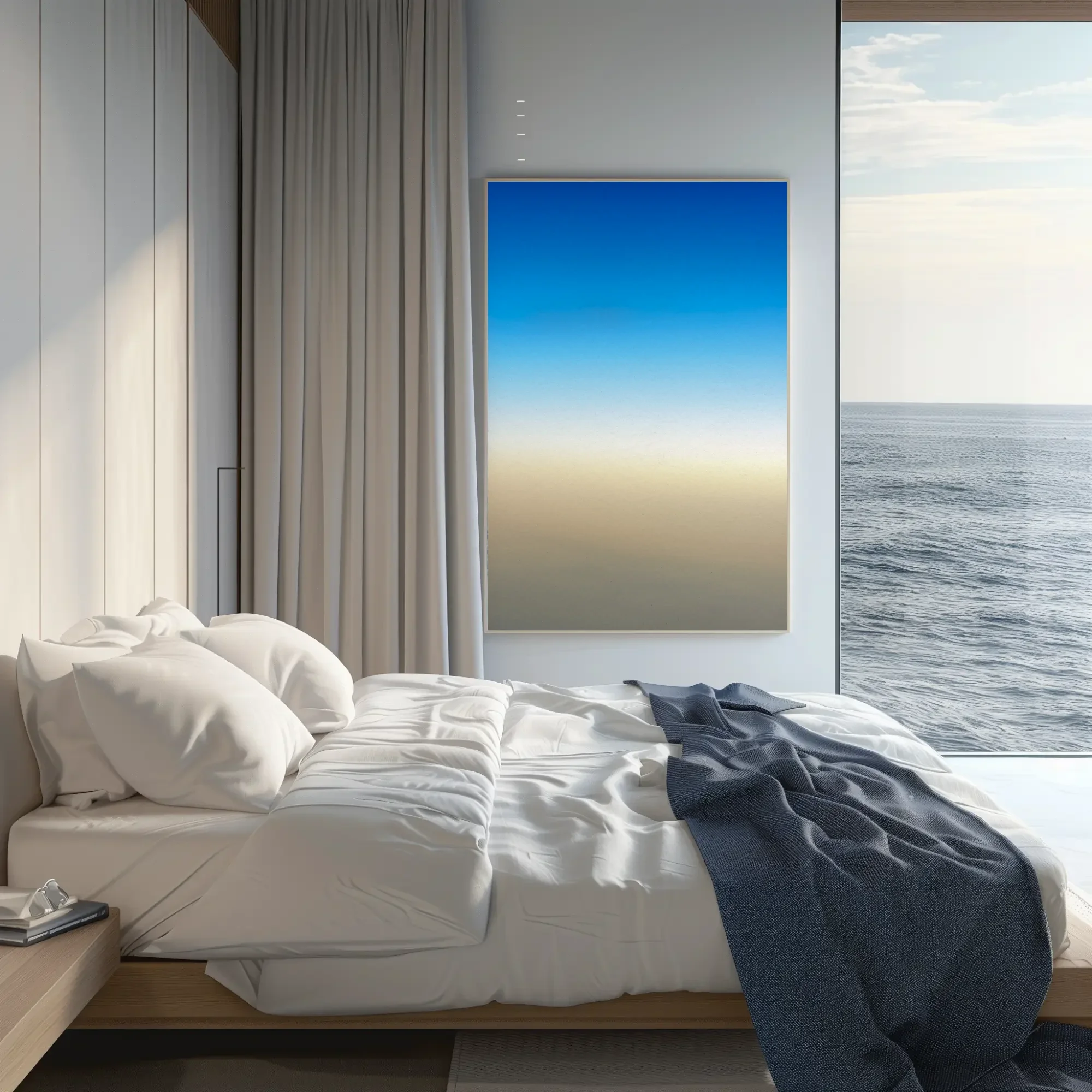
The colours that settle a bedroom are the ones already in it: sand, linen, fog grey, unbleached white, the blue of a sky an hour after sunset. Five of the eight prints above are built from beige and blue, which is why they disappear into a calm room and deepen it rather than decorate it. Rest is nearly neutral: bark beige, fog grey, soft brown.
What doesn't settle is saturation. A strong red or an acid yellow above the bed reads as a signal, and a signal is the last thing you want at midnight. The one warm accent on this page, the strike of gold in GħAjn, is a small part of a mostly blue and beige image. If your walls are cool grey, the blues in Adrift I and Surcando read deeper; against warm wood and linen they stay light. Gradient I spans both temperatures, which is why it bridges rooms that mix the two.
Paper, dibond or acrylic above a bed?
For a print above the bed I would choose paper or dibond, and here is the reasoning. A bedroom has lamps at pillow height, and an acrylic face-mount is a sheet of glossy plastic: from the pillow, you'll see the bedside lamp reflected in it before you see the picture. Acrylic gives the deepest colour of the three, and it suits the wall you face from the bed, lit from the side, better than the wall behind it.
Fine art paper is matte, with no reflections at all. Printed on Hahnemühle Photo Rag and framed by a local framer behind museum glass, it is the quietest presentation and the one that suits fog and soft horizons. Aluminium dibond sits flat to the wall with a satin surface, no frame and no glass, which matters above a pillow: nothing heavy and nothing that can break is hanging over the place you sleep. Acrylic is the choice for the facing wall. All three ship unframed, and shipping is included on paper.
One print above the bed, or a pair?
One large print is the stronger choice above a double bed, because the bed is one shape and a single image answers it. A pair belongs where the wall is wide and the bed is not, or on the wall opposite, where two portrait prints at 60 × 90 cm hung 8 to 10 cm apart read as one composition. If you pair, pair by palette rather than by subject: Rest and Gradient I share beige and grey, Adrift I and Surcando share white and blue. Two images fighting for attention above a bed is worse than one loud one.
Bed widths, headboards and shipping: bedroom wall art questions
What size wall art should go above a queen or king bed?
Aim for two-thirds to three-quarters of the bed's width. A queen bed is about 150 cm wide, so a print 100 to 115 cm across fits: my 100 × 150 cm format hung horizontally. A king at 180 to 200 cm wants 120 to 150 cm of print, which is the same 100 × 150 cm piece, a pair of 80 × 120 cm prints, or a custom width. In inches, a queen takes roughly a 40 × 60 in landscape print.
How high should I hang art above a headboard?
Leave 15 to 25 cm (6 to 10 in) between the top of the headboard and the bottom of the frame. Closer than that and the two read as one object; further and the print floats. Without a headboard, put the centre of the picture at 145 to 150 cm (57 to 60 in) from the floor.
Should bedroom art be horizontal or vertical?
Horizontal above the bed, because the bed is a wide, low shape and a horizontal print continues it. Vertical prints belong on the side walls, above a chest of drawers, or on the wall you face from the pillow, where a tall image has room to stand.
Is photography a good choice for bedroom wall art?
It depends on the photograph. A sharp image with a clear subject keeps the eye working, which is the opposite of what a bedroom needs. The prints on this page are made with the camera moving during a long exposure, so sea, sky and fog dissolve into bands of colour with no edge to catch on. They sit on the wall like weather rather than like a scene.
Do you ship prints to the United States and the UK?
Yes, worldwide. Shipping is included on fine art paper prints; dibond and acrylic are quoted for your address. Production and delivery take two to four weeks. Each print is made to order, so choose a size and presentation on the print page, send the inquiry, and I reply with a delivery time and payment details.
Living room, neutral and minimalist guides, print sizes and prices
I'm Markus H. Green, a photographer based in Nice. I make abstract and minimalist photographs of sea, sky, fog and cities, mostly with the camera moving, and print them to order on paper, dibond and acrylic. There is no shop on this site. I answer every inquiry myself, and I'm glad to talk through a specific wall before you order. More about the work, or get in touch.