Fine Art Paper
What sets an archival print apart from a poster, and why the paper is part of the composition.
The paper a photograph is printed on changes how the image sits in a room, how it handles light, and how it holds up over time. Most people don't think about this until they've made the wrong choice once.
Archival Pigment Prints vs Posters: The Material Difference
Most printed images come on wood-pulp paper. It's inexpensive and widely used for commercial printing. The problem is lignin, a compound found in wood fibers that breaks down when exposed to light, air, and humidity. A paper made from wood pulp yellows, becomes brittle, and eventually cracks. This happens in years, not decades, regardless of how well the print is framed.
Fine art papers are made from cotton fibers, not wood. Cotton is naturally free of lignin and acid. It doesn't degrade the same way. Archival documents (historical maps, manuscripts, official records) have been printed on cotton-based paper for centuries for exactly this reason. The same properties make it the only suitable substrate for a print intended to last.
Why Curators Choose Hahnemühle Photo Rag for Matte Fine Art Prints
My standard is Hahnemühle Photo Rag, a 100% cotton matte paper that has become the reference point for museum-quality printing. It isn't the only option, but it's the paper most curators and collectors recognize by name.
The defining characteristic is that the surface absorbs light. Most papers reflect it. A glossy or semi-gloss finish catches the angle of nearby lamps and fragments the image with surface reflections. A matte cotton rag does the opposite: the image settles into the surface, and the surface settles into the room.
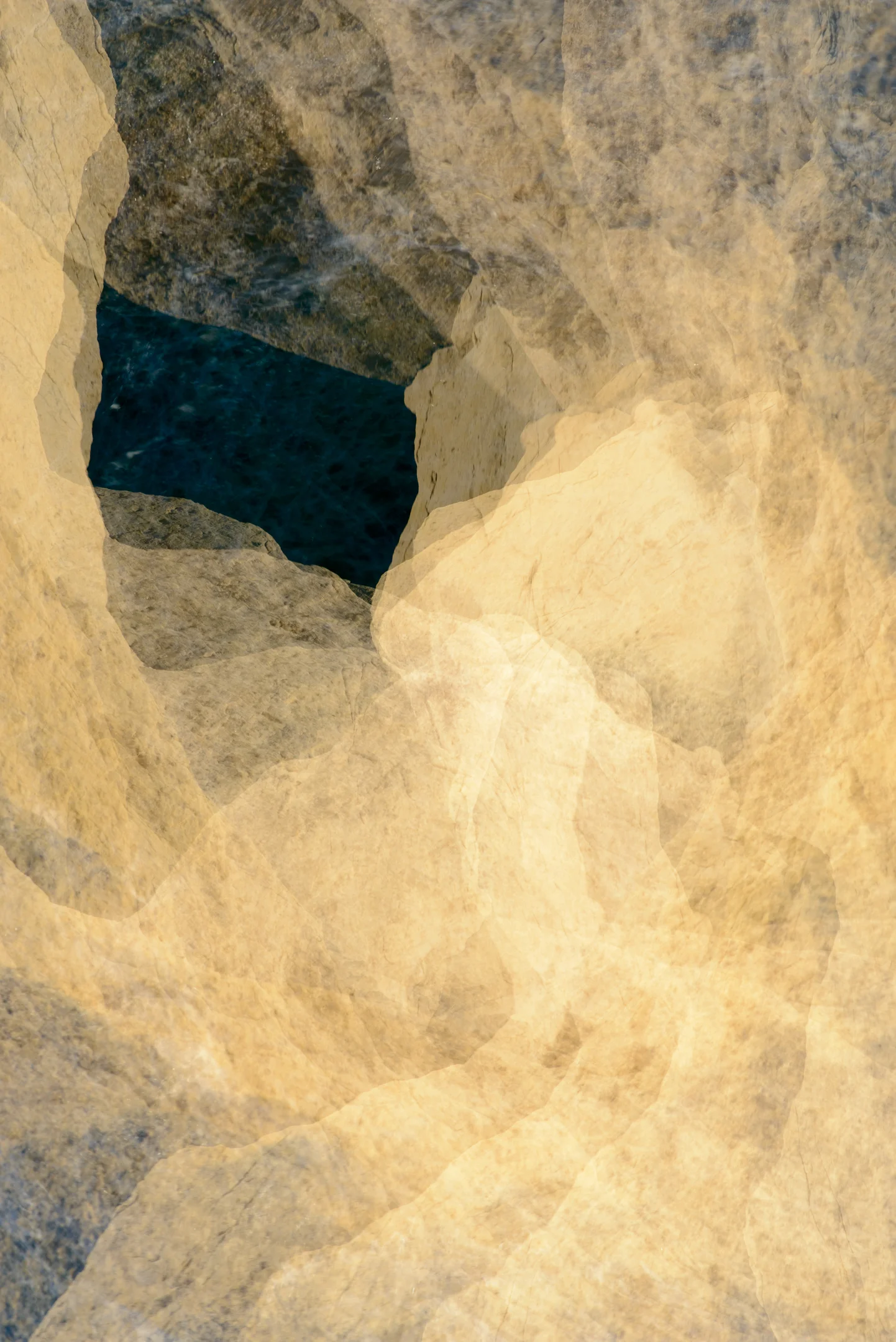
For work built around soft tonal transitions (blurred water, layered exposures, atmospheric gradients), this matters. Reflections interrupt those transitions. Matte cotton lets them breathe.
The paper also has physical weight. It feels substantial, and when mounted and framed, the image no longer seems printed onto a surface. It feels embedded in one.
Matte vs Baryta Paper for High-Contrast Architectural Photography
For work with stronger tonal contrast (deep blacks, architectural shadows, high-contrast edges), Baryta paper is often worth discussing.
Baryta is coated with barium sulfate, a material historically used in traditional darkroom printing. The coating gives the surface a gentle semi-gloss quality while retaining exceptional depth in the shadow areas. The technical measure here is D-Max: the deepest black a paper can achieve before detail opens up into grey. Baryta D-Max is among the highest of any fine art paper.
If the image you're drawn to carries real weight in its dark areas, Baryta is worth considering. It produces a different feeling from matte cotton. Neither is better. They suit different work.
Understanding Archival Permanence and Pigment-Based Inks
Fine art printing uses pigment-based inks rather than dye-based inks. Pigment inks bond with the paper at a molecular level rather than sitting on top of it. Combined with cotton rag paper, rated longevity exceeds 100 years under standard indoor conditions without noticeable fading.
One more detail: optical brightening agents, or OBAs. Cheaper papers add these chemical compounds to appear brighter white under UV light. They work for a while, then degrade: the paper eventually yellows. Papers without OBAs start slightly warmer in tone and stay that way. The difference is small in the first few years and visible over time.
How Fine Art Paper Interacts with Room Light and Interiors
A matte print handles indirect light, overhead tracks, and large windows without glare. This makes it well-suited to the rooms where art tends to hang: living spaces with natural daylight, offices with strong overhead lighting, corridors with spotlights.
There is something harder to describe about how the texture behaves. The image no longer sits in front of the paper. It sits within it. For work that is already trying to suggest depth, layering, or atmosphere, the surface reinforces what the image is doing rather than working against it.
Choosing the Right Paper for Your Space
Paper selection is part of the conversation when a print is ordered. The right choice depends on the image, the space it will live in, and what the work is supposed to do there. There is no single answer that applies to every photograph and every wall.
If you have a specific piece in mind, get in touch. That is where this starts.