Minimalist Wall Art
Photography prints reduced to one subject and a few tones
Minimalist wall art gives the eye one thing to do. The seven photographs on this page are sea, sky, fog and one path, each reduced to a single subject and two or three colours, with the detail taken out by weather or by the camera moving during the exposure. Each is printed to order on fine art paper, aluminium dibond or acrylic, in sizes up to 100 × 150 cm, and shipped worldwide.
What makes a photograph minimalist?
A minimalist painting starts with an empty canvas and adds as little as possible. A photograph starts full. The camera records everything in front of it, so a minimalist photograph is made by taking things away, and what you use to take them away shapes the result.
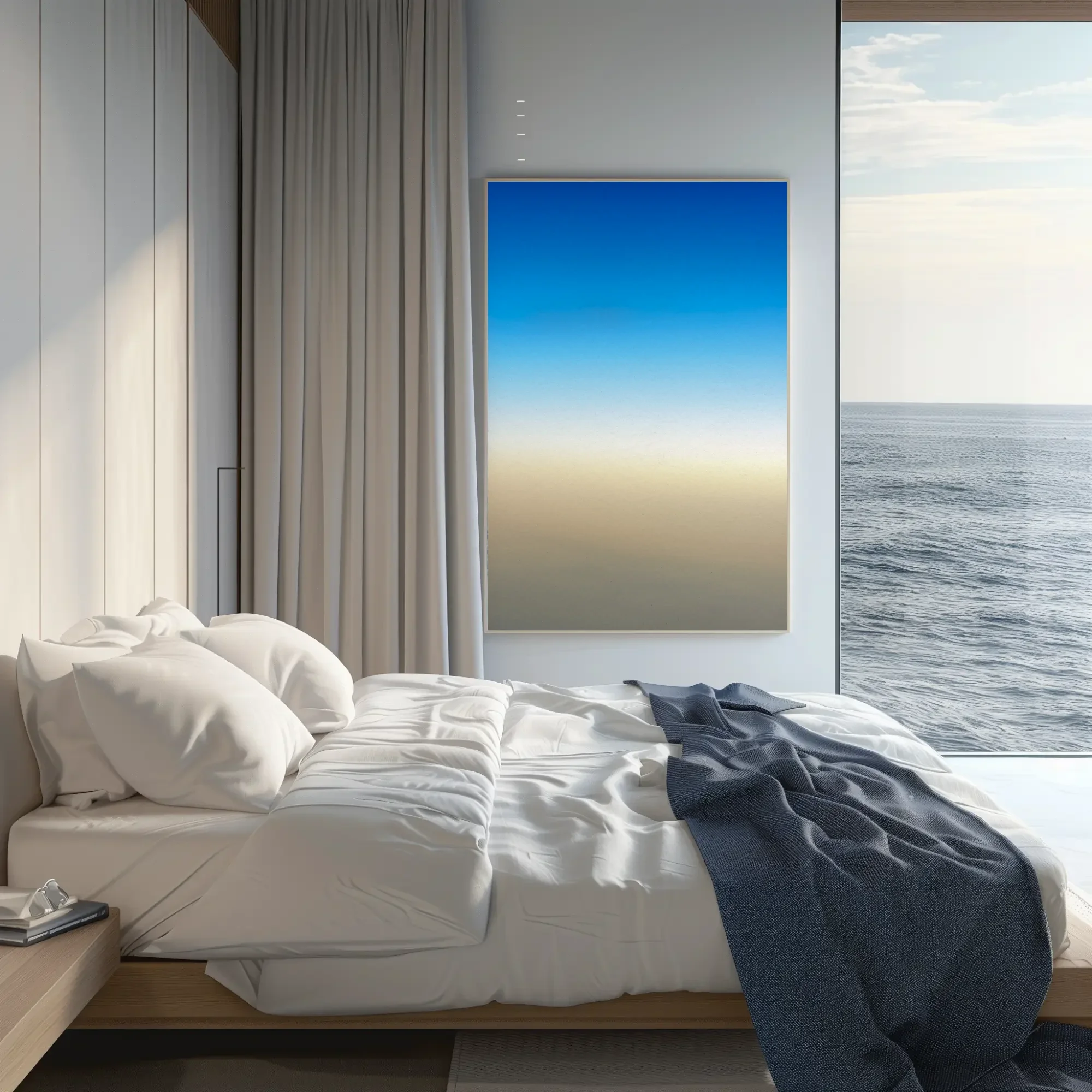
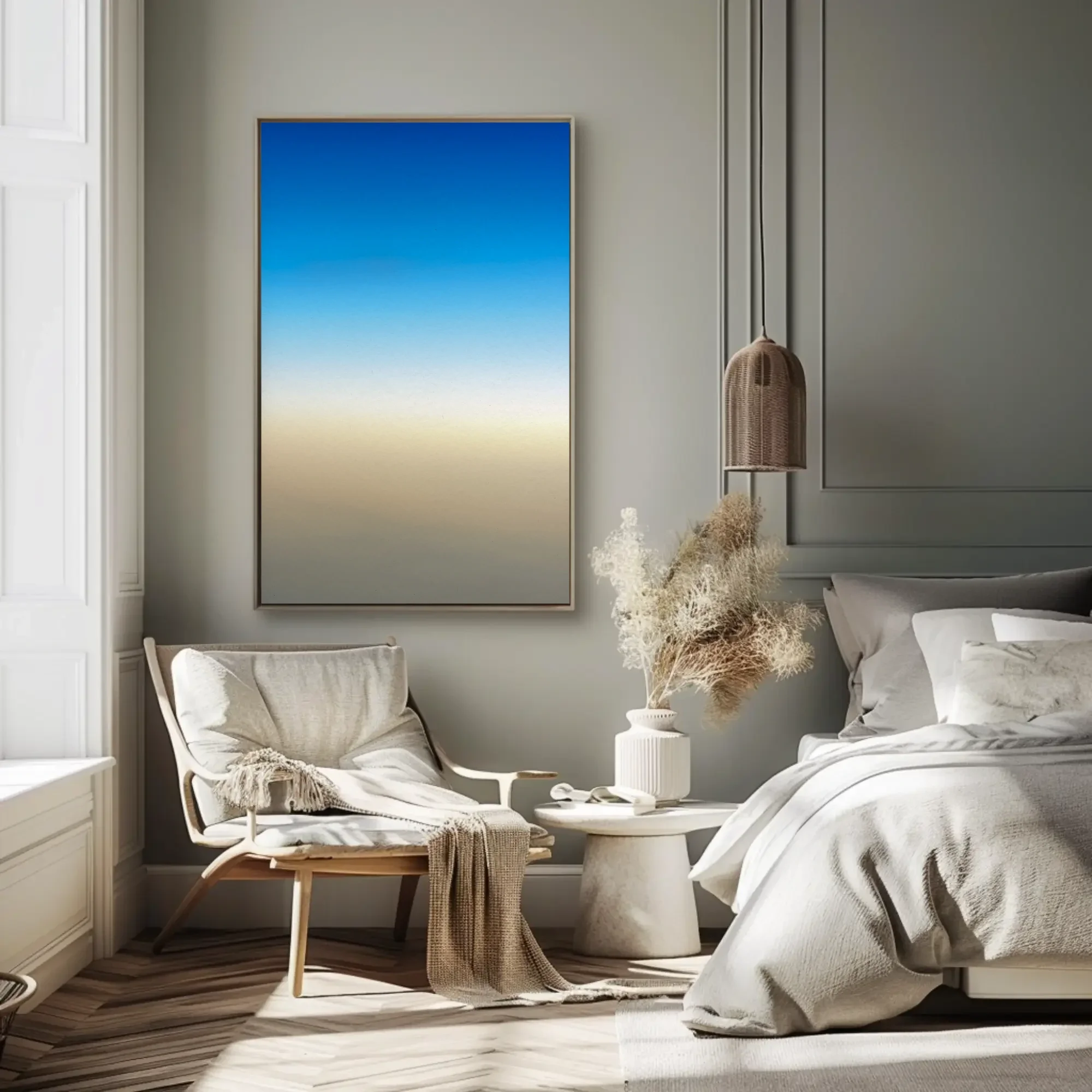
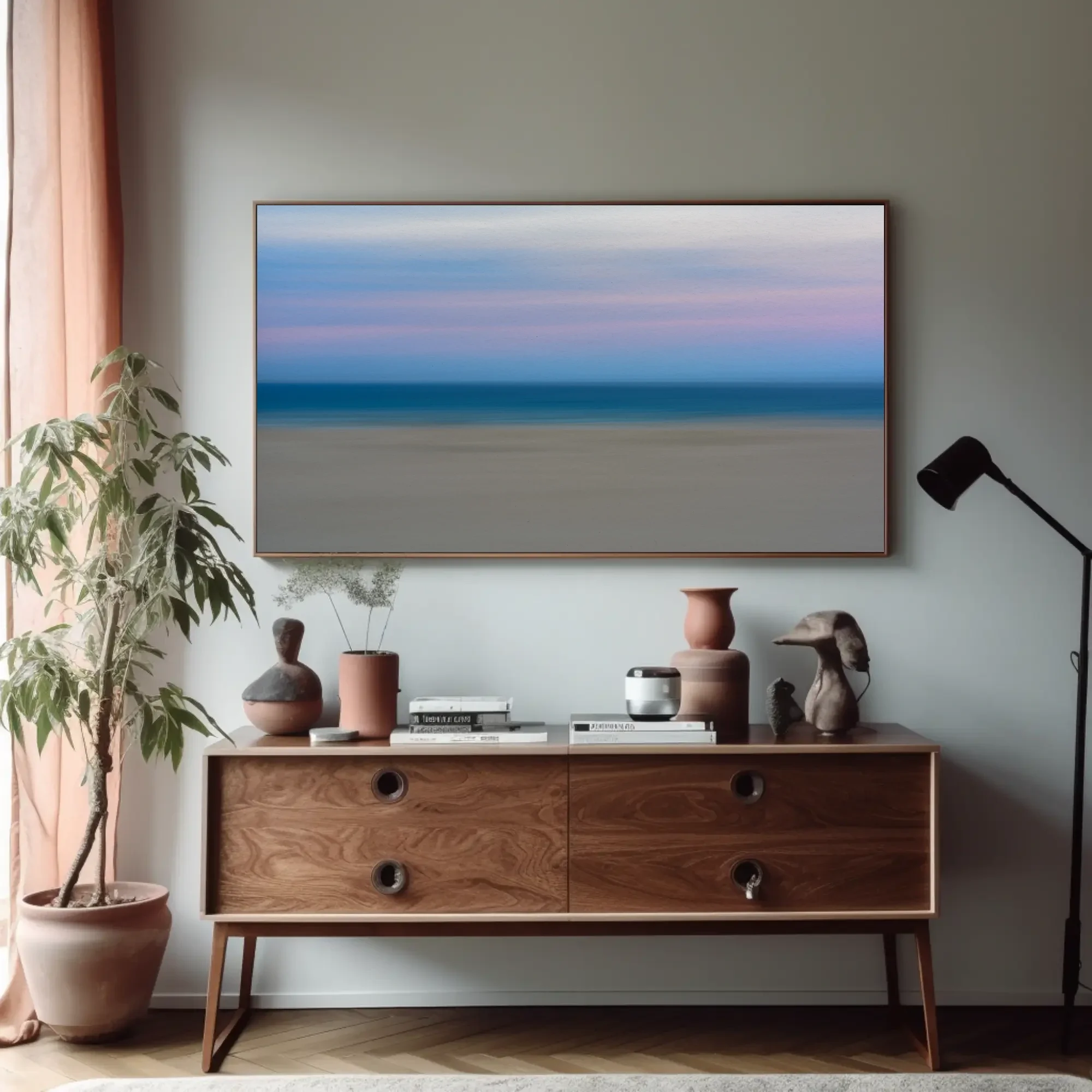
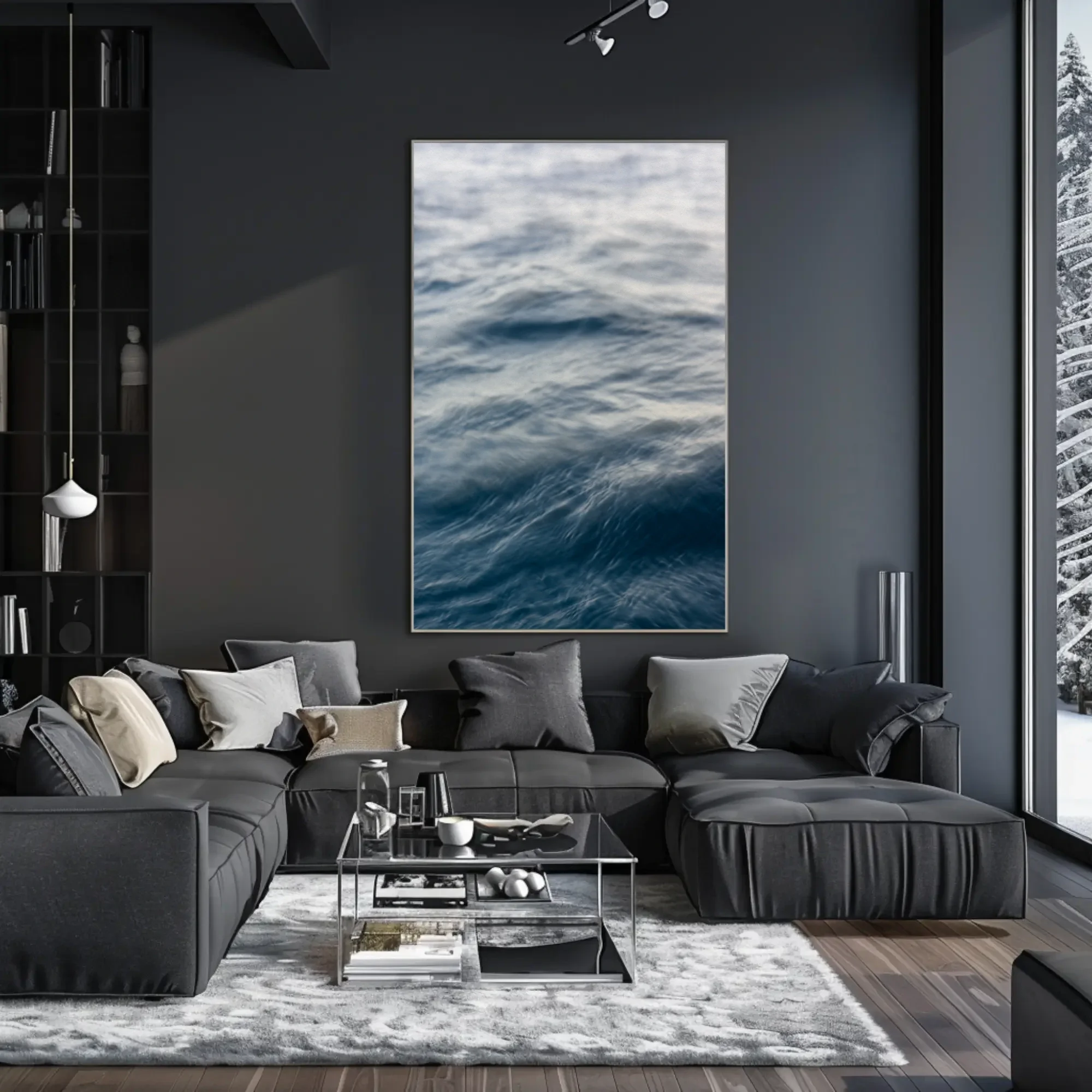
Fog is the oldest tool. In Rest, it removed the Black Forest and left a bench; in Schritte, it closed the world down to the first few trunks and a path. Distance and altitude do the same job in Surcando, where a valley becomes a grey ridge under one sweep of cloud. The rest of these prints were reduced by movement. I let the camera move during a long exposure, on a plane for Gradient I, on a rocking boat for Adrift I, walking for Raya and Regung II, and the detail blurred into tone. A beach became three bands. A street became pale stone and light.
What survives that process is different from what a graphic minimalist print offers. A line drawing or a colour block is flat by design. These keep the grain of the world in them: the drift of cloud, the texture of water, the softness of fog. They are quiet from across the room and full up close.
Seven minimalist prints: sea, sky, fog and one path
Ordered from the emptiest image to the one with the most left in it. Each links to its own page with the full story, the palette and prices by size; the mockups show the print in a room so you can judge the scale.
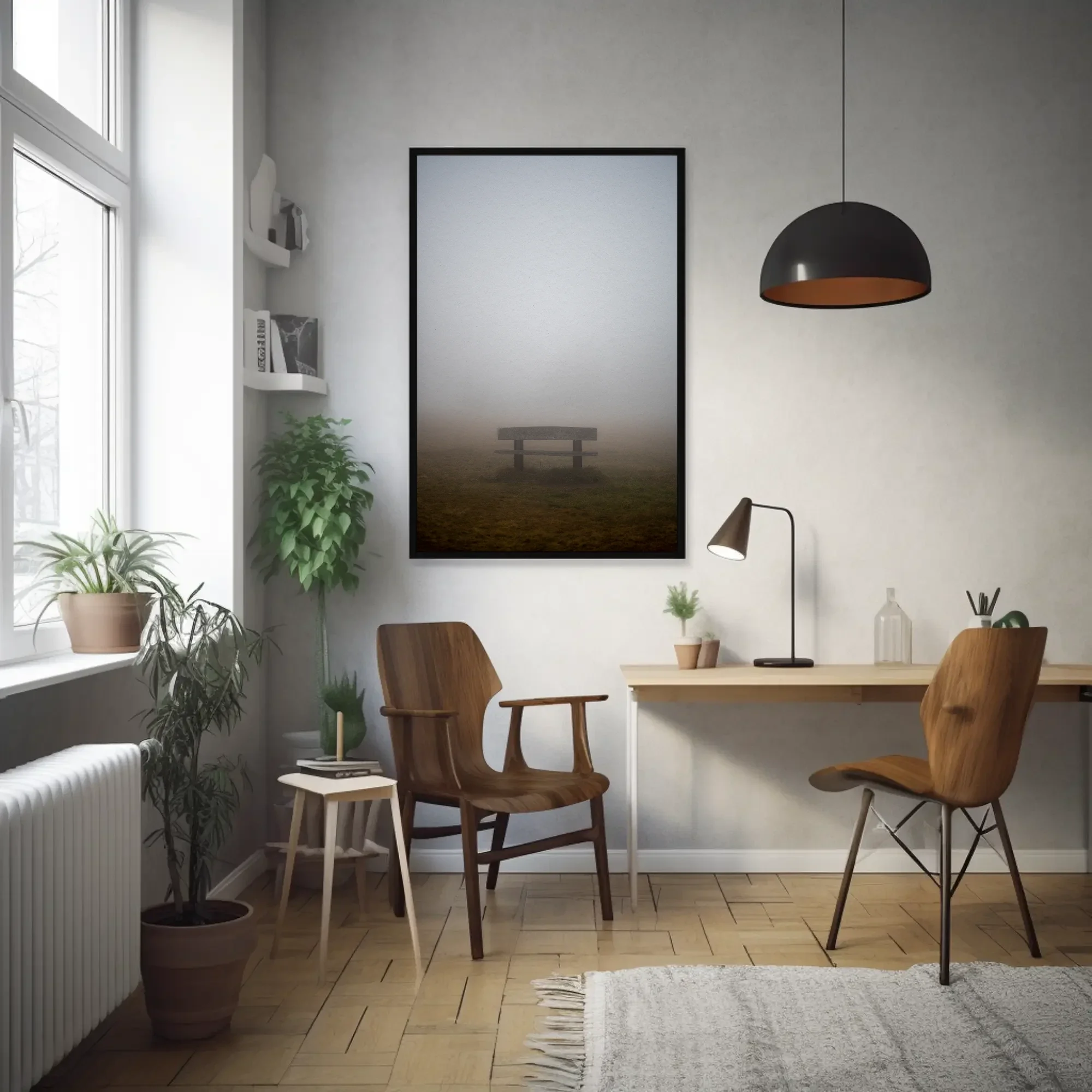
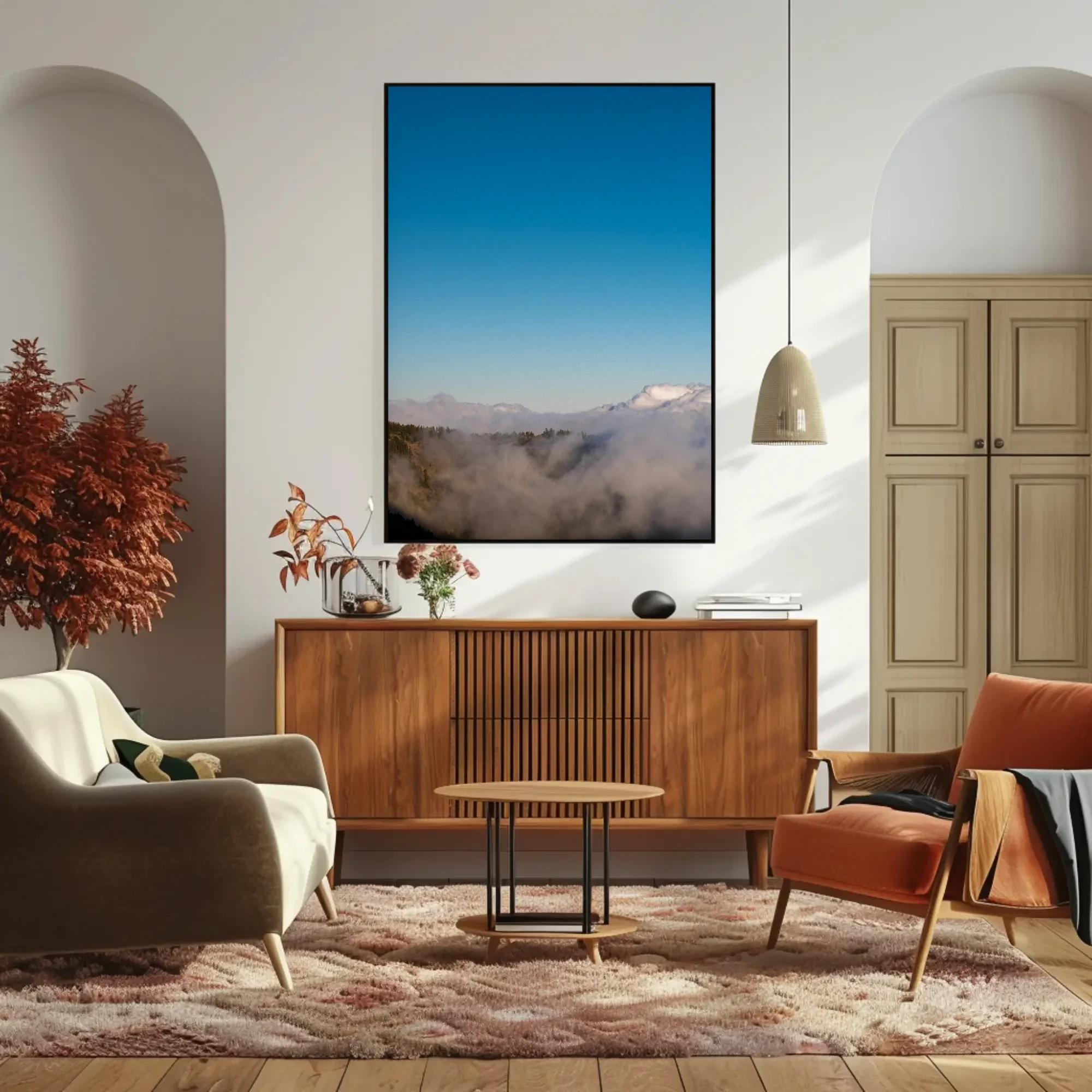
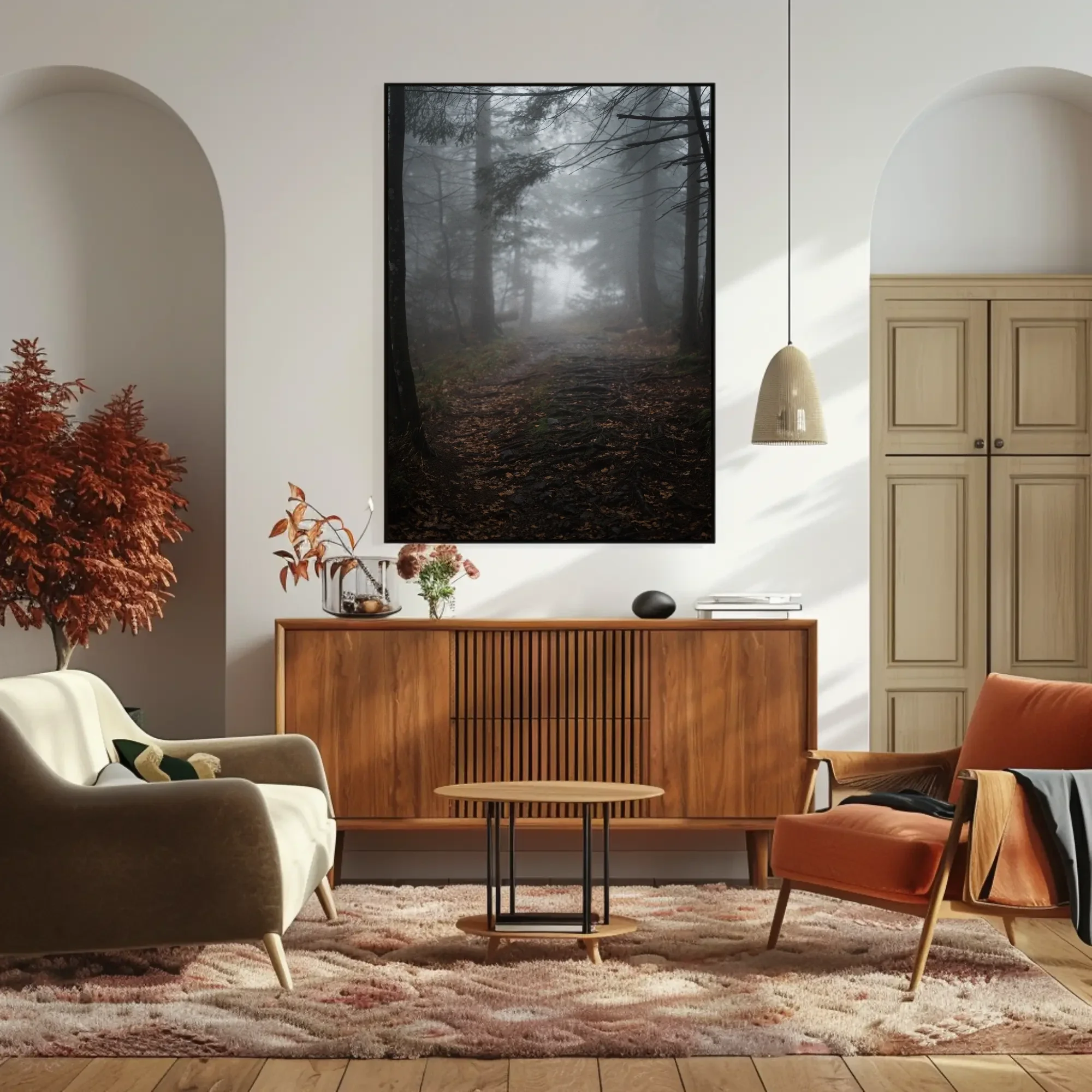
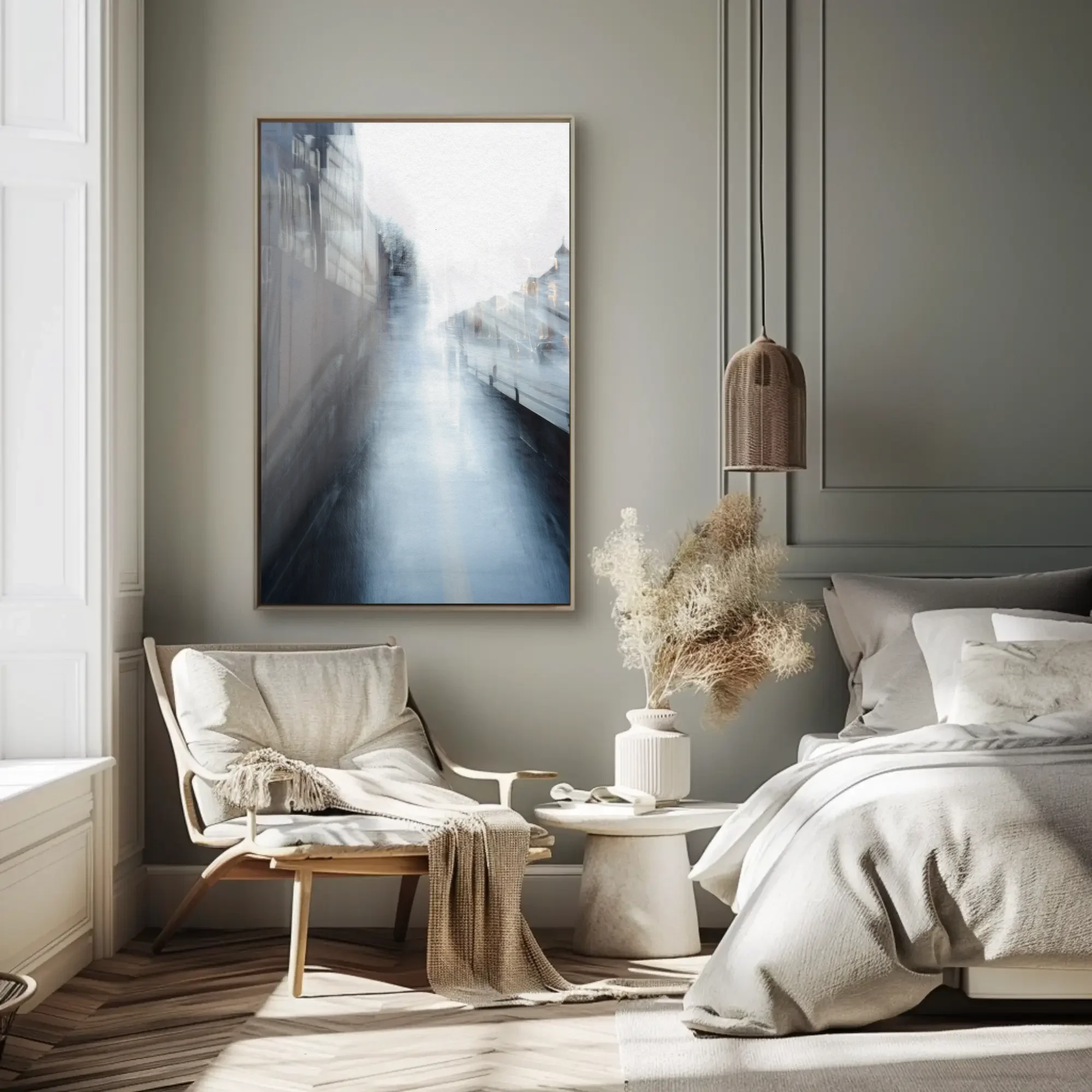
Minimalist wall art needs empty wall around it
The wall is part of the composition. A print with three bands of colour in it, hung between a bookshelf and a lamp, becomes a fourth object in a row of objects. The same print alone on a wall becomes the wall's subject. As a rule, leave at least the width of the print in bare wall on each side, and more above it than below.
That also settles the gallery wall question. A cluster of small frames is the opposite of what these images do, and one of them in a cluster reads as the gap. Hang one piece. If a room needs a second, put it on another wall, or pair two prints that share a palette, Raya and Gradient I, or Rest and Schritte, at the same size with a hand's width between them, so they read as one wide image with a seam.
Large minimalist wall art: the format is the statement
When there is little in the image, the size of the image is what people notice. A 40 × 60 cm print of fog is a pleasant thing on a shelf. The same image at 100 × 150 cm changes the temperature of a room. This is why I would go one size up from your first instinct on any print here, and two on the emptiest ones. Gradient I and Adrift I, which have no subject at all, only work at scale.
The formats: 100 × 150 cm above a sofa or a double bed, 80 × 120 cm above a sideboard or a desk, 60 × 90 cm on a wall you face from a chair. Raya is the one landscape print here, made for the wide wall above a bed; the others are portrait and want height. The print sizes guide lists every format in centimetres and inches, and I'm happy to tell you which I would hang if you send me a photo of the wall.
Is black and white more minimalist than colour?
It's the more common answer, and it isn't the only one. Black and white reduces an image by removing colour, and the result tends towards graphic: strong shapes, hard contrast, something that reads from the street. Reducing the palette instead of removing it produces a quieter kind of minimal. Raya is blue, sand and a breath of red. Rest is beige, grey and brown. Surcando is white and grey with a little green. Two or three colours at low saturation hold a room's mood without setting it, which matters in the rooms where you sit rather than the ones you walk through.
If you want the calm of these prints in a room that is already neutral, the neutral wall art page sorts the quieter prints by warm and cool undertone. If the room is a bedroom, the bedroom wall art page covers size and height above the bed.
Frame or no frame for a minimalist print?
A heavy frame puts an object around an image that was made by removing objects. For these prints I would choose aluminium dibond first: the print is mounted to a rigid panel and hangs a few millimetres off the wall with a clean edge, no frame and no glass. The image ends where the image ends. If you prefer fine art paper, keep the frame thin, a natural wood or a dark metal in a tone from the image, and either give it a wide mount or none at all. The framing guide goes through the options. Both ship unframed, and shipping is included on paper.
Colour, size and framing: minimalist wall art questions
What makes wall art minimalist?
One subject, a small number of tones, and enough empty space that the subject can breathe. In a photograph that usually means the details have been removed rather than never included: by fog, by distance, or by moving the camera during the exposure so that texture blurs into tone. A minimalist print gives the eye one thing to do.
Does minimalist wall art have to be black and white?
No. Black and white is one way to reduce an image; limiting the palette to two or three colours is another. Every print on this page is in colour, held to a handful of tones: blue and sand, grey and white, fog and bark. Colour at low saturation reads as calm rather than graphic, which suits rooms where you spend time rather than pass through.
What size should a minimalist print be?
Larger than feels safe, on a wall with room around it. Because the image has so little in it, the format carries the statement. Above a sofa or bed, 100 × 150 cm is the right scale; 80 × 120 cm suits a sideboard or a smaller wall. Leave at least the width of the print in empty wall on either side.
Should a minimalist print be framed?
Lightly, or not at all. A heavy frame adds an object to an image that was built by removing objects. Aluminium dibond hangs frameless with a clean edge, which suits these prints best. If you prefer paper, choose a thin wood or metal floating frame in a tone from the image, with a wide mount or none.
Do you ship to the United States and the UK?
Yes, worldwide. Shipping is included on fine art paper prints; dibond and acrylic are quoted for your address. Production and delivery take two to four weeks. Every print is made to order: choose a size and presentation on the print page, send the inquiry, and I reply with a delivery time and payment details.
Living room, neutral and bedroom guides, and every minimalist print
I'm Markus H. Green, a photographer based in Nice. I make abstract and minimalist photographs of sea, sky, fog and cities, mostly with the camera moving, and print them to order on paper, dibond and acrylic. There is no shop on this site. I answer every inquiry myself, and I'm glad to talk through a specific wall before you order. More about the work, or get in touch.