The first questions are often the same. What is this? Where was it taken?
The place is real and it has a name, I was there. But I’ve noticed that for some viewers the answer is where the looking ends. They wanted to solve the image, and now it’s solved. A coastline in Portugal. Alright. Next.
What interests me is when the answer is where the looking begins.
A photograph is bound to an actual place and an actual span of time. We like to talk about capturing a moment, even though that’s not quite accurate. However long the shutter was open, that’s how much time is in the picture, and for some of my work that’s fifteen seconds of water moving that no eye ever saw in that form as a single thing. All of it happened. It just never came together that way for anyone standing there.
The binding, being tied to a place and a span of time, is not a choice. It’s the mechanism. I don’t photograph memories, and I don’t take pictures of photographs. Whatever ended up in the frame, I was physically there to witness what happened.
This is where photography splits from painting. A painter can paint a coastline from a postcard, from memory, from nothing at all, and we accept the picture as their version of a place, or of no place. A photograph doesn’t get that freedom, and doesn’t want it. It arrives with a certificate attached: this place existed. The viewer knows it, feels it, and that feeling is a large part of the pull. It’s also why the first questions are often what is this? or where is this? and not what do you mean by this?
Bound is not the same as neutral.
Every frame is a reduction. Three dimensions pressed into two, a stretch of time flattened onto one plane, everything to the left and right of the edges cut away forever. Before I’ve made a single deliberate choice about style, the medium has already made a dozen for me. And then I make mine. Where to stand. When to open the shutter and for how long. What stays sharp, what dissolves, what the camera is allowed to see at all.
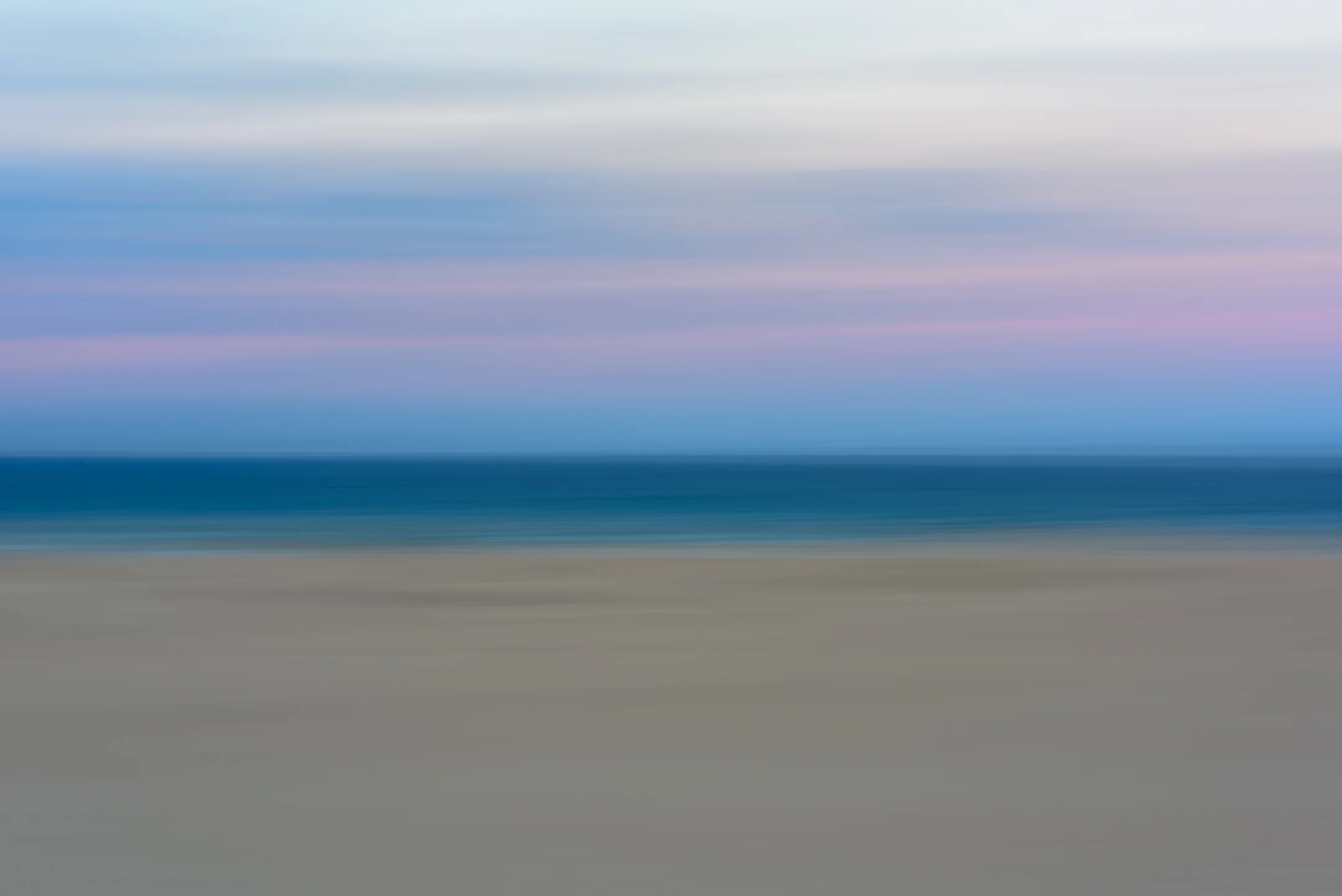
In my abstract work this is obvious. When a long exposure turns a coast into a field of gradients or a busy city into a wash of impressions, nobody mistakes it for documentation. The interpretation is right there on the surface. My representational work hides it better, but the reduction is the same in kind, only smaller in degree. There is no setting on any camera that produces the place itself. There is only ever a decision about how a place gets seen, and someone had to make it.
So the photograph sits at a strange intersection. It’s tied to a real place in a way a painting isn’t, and at the same time it’s not the place at all. It’s my reading of it. That tension isn’t a flaw in the medium. For me it’s the whole point.
Because what I’m after isn’t recognition. It’s feeling. If you know the place, I want the image to bring something back, not in a fleeting sense, the way a snapshot does, but more like a smell that pulls you into it. And if you’ve never been there, I want it to produce a yearning for an experience you haven’t had. This is my offer, as far as I can articulate one: here is something real that you would not have seen this way, or perhaps at all.
And then it leaves my hands entirely.
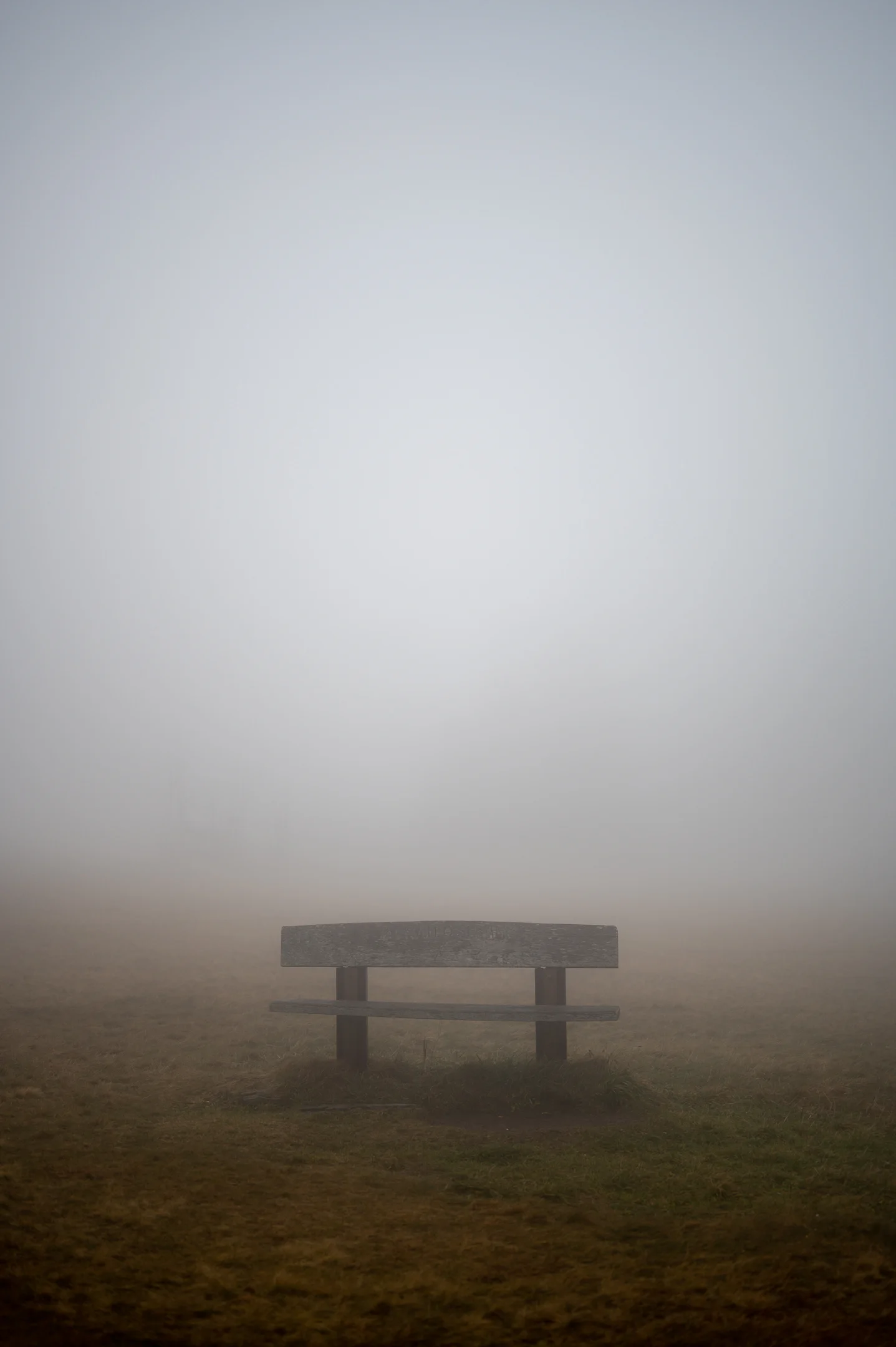
There’s a piece I find calming. Someone stood in front of it and told me it made them sad. I used to think a reaction like that would bother me. It doesn’t. If anything there’s a kind of playfulness in it, watching an image I know so well become something I don’t recognize in someone else’s eyes. Their melancholy is as real as my calm. The image holds both without strain.
I think this is why nothing in interpretation can really be a miss. I put something into the work, always. There’s an intention in how I want a place to be seen, a story I’m telling myself while I make it. The photograph is my medium, the aesthetics are the way in, and whatever comes through the door after that belongs to the person who walked through it. If someone stands in front of a photograph of a coastline they’ve never visited and finds themselves thinking about their own life instead, the image did more than I asked of it, not less.
So yes, ask me where it was taken. I’ll tell you. The place is real. And then, if you’re willing, keep looking, because the place was only ever the beginning.