I once read about someone who goes fishing regularly, but says he’s perfectly fine if he comes home without catching anything. That stayed with me for a while. It seems almost paradoxical at first: if you go fishing, surely the fish is the point. That’s the whole premise. You drive out somewhere, you set up, you wait, and the obvious measure of whether it was worth it is what you bring back.
But the more I thought about it, the more I saw some meaning in it. And somewhere in that thinking, I started recognising myself in it.
I go out to photograph. A similar premise: I carry a camera, I look for images, and technically the measure of a good outing is whether I come back with something worth keeping. But I’ve also come to let go of that feeling, and not because I only took bad pictures.
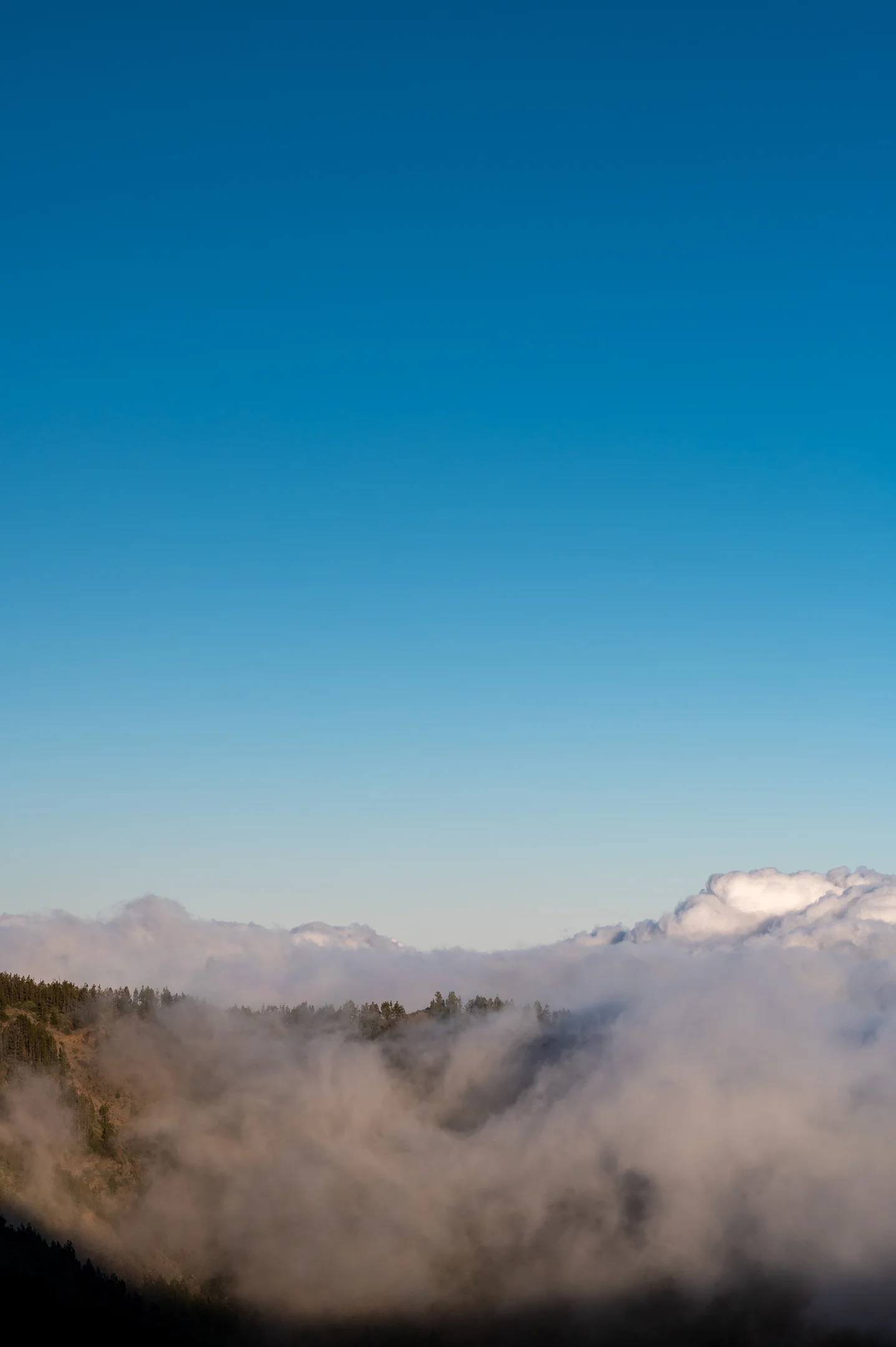
There are days I go out and don’t take a single photograph. Not because nothing was there, but more because I wasn’t ready for it, or the light wasn’t right, or I was just walking and looking and the camera stayed by my side. That used to feel like a failure of some kind. Now it doesn’t. What I lean into is something closer to active meditation. I slow down physically, walk at a pace I almost never use anywhere else, and start noticing things I’d normally pass through without registering. Texture on a wall, the way light falls on concrete at a particular angle, small things that exist all the time and go completely unseen. That’s an end in itself.
The camera has also made me more courageous, in ways I didn’t expect. It gives me a reason (or maybe just permission) to go places I wouldn’t otherwise go. To climb up some rocks because the view might be worth photographing, to turn down an alley that looks a little uncertain, to linger somewhere longer than feels socially normal. The drive to look for something creates its own momentum, and even when nothing comes of it photographically, the experience of having gone there is its own reward. The camera as a pretext that turns out to matter more than the photograph it was meant to produce.
I think this is also connected to why I started photographing in the first place. I was an exchange student in Japan, in my early twenties, and it was a lot. Being in a different country, living in a different culture, and an enormous amount of new information arriving all at once. I suspect I would have drowned in it if I hadn’t found a way to filter. The camera gave me that. Looking through a viewfinder forces a kind of focus: you’re not trying to absorb everything, you’re asking one smaller question: what’s here that’s worth framing? That question made the world more manageable. It gave me a way to reduce the world into a small rectangle, and I’ve been asking it ever since. That might be tied to some elements of neurodiversity, something I didn’t think about at the time, but makes sense in retrospect. The camera doesn’t just slow me down aesthetically; it gives the restless part of my brain a clear task.
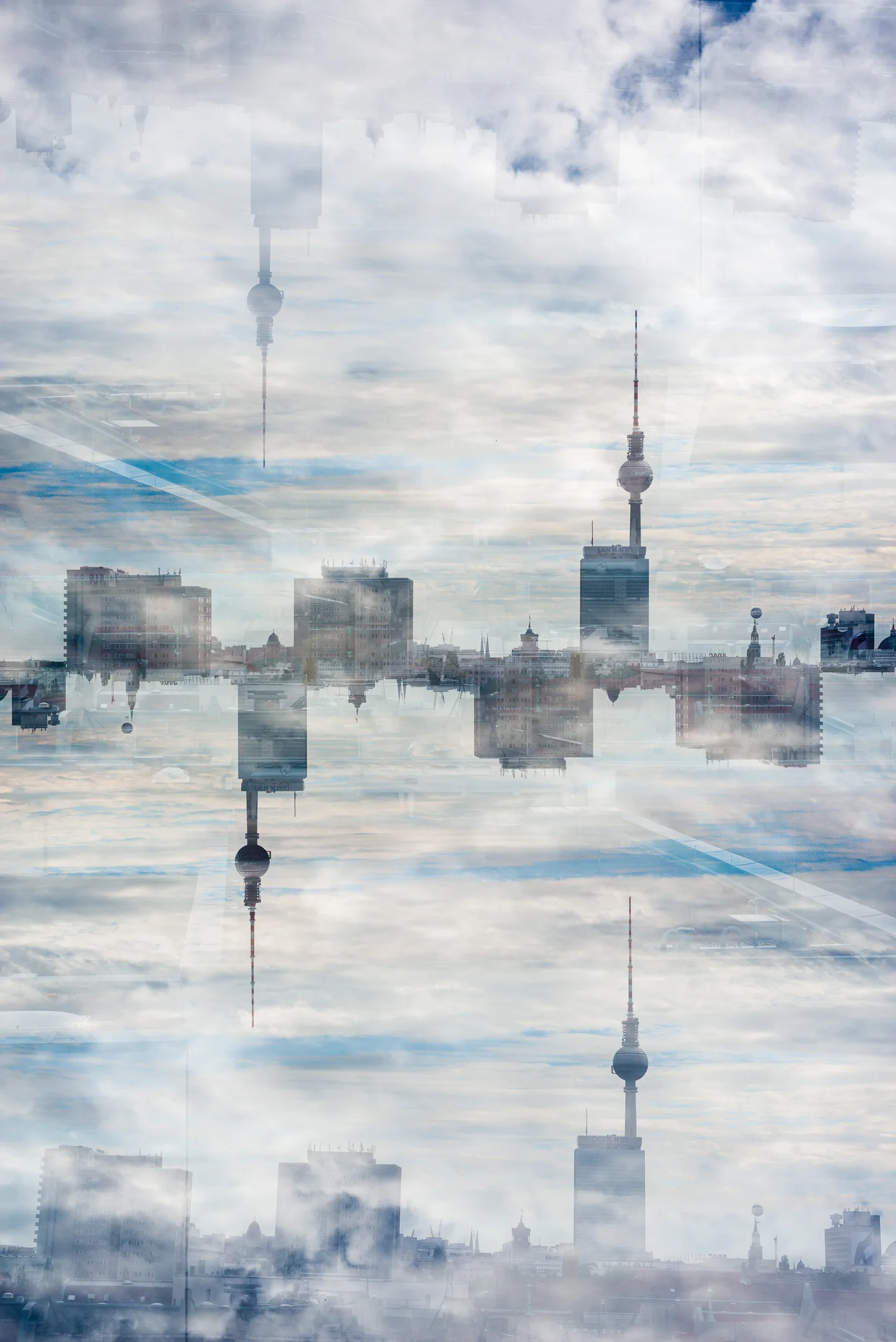
Going out alone is essential to this kind of work. Not out of misanthropy. I enjoy the connection that comes with photographing people, the different kind of attention that requires, and that’s worth its own conversation. But for this, solitude isn’t a preference so much as a structural necessity. I need the pace to be mine, and the slowness is the work. You can’t really be slow on someone else’s schedule without it becoming something other than what it needs to be.
When I’m alone with the camera, I’m more aware of small beauty than at almost any other time, not in a forced way, but more that the act of genuinely looking for something frameable makes things visible that are otherwise just background. Living in cities means developing a kind of selective blindness to almost everything around you, otherwise the input is too much. The camera reverses that. It’s a way of choosing to see.
People talk about patience in photography as though it’s about standing still and waiting. Sometimes it is, but more often it’s something else: circling a subject, approaching it from different angles, returning to a place at a different time of day because the light was wrong the first time. Patience as a longer relationship with a place and observation, rather than just a single session of stillness.
What I’m usually waiting for is a missing element. I might discover a structure I find interesting (an architectural detail, a geometry in the shadows) but something isn’t quite there yet. Maybe someone needs to walk through the frame, maybe the light needs another twenty minutes, maybe I need to come back in winter when the trees are bare and the shapes are clearer. The patience is about staying open to what completes the image rather than forcing it. And sometimes what arrives isn’t what I was waiting for at all, which is something to accept and embrace, rather than resist.
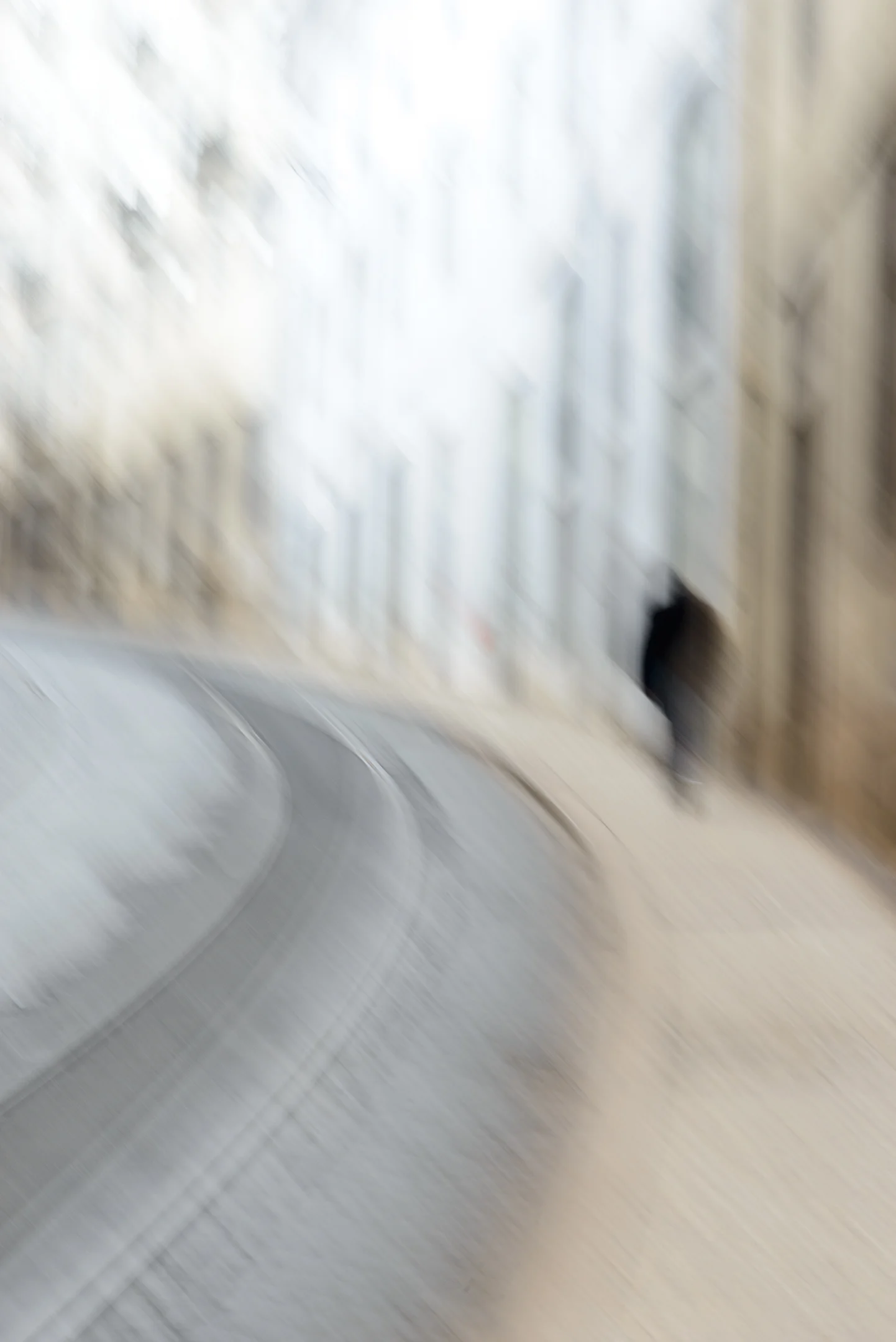
This brings me back to the fishing story. The fisherman can’t control the fish. He can choose the spot, read the conditions, be there at the right hour, but the catch is not his to command. What he controls is the quality of his attention and whether he shows up at all.
I work the same way. My interest is in discovering what’s already there, finding a perspective on things that are essentially outside my control. I don’t build scenes or orchestrate environments, at least not in this kind of work. I move through a place and look for what it’s offering, and the authorship is in the framing, the angle, the decision to stop here rather than there. But the material isn’t mine to summon.
There’s something I genuinely enjoy about that, which surprises me a little because I tend toward control in most other areas of my life. I obsessively plan things, obsessively think them through, have had a lifelong habit of trying to intellectually (obsessively) manage my way around uncertainty. Photography has been a slow education in the opposite direction: in trusting what I feel rather than what I’ve figured out, in accepting that some things can’t be resolved by thinking harder, and that the image either comes or it doesn’t. I photograph to pay attention. That turns out to be enough.
And sometimes paying attention means not photographing at all. There are things I see and deliberately don’t take a picture of, not because they wouldn’t make a good image, but because I’d rather just be there with them. There’s a scene in The Secret Life of Walter Mitty where a photographer finally finds the rare animal he’s been chasing for years, and when he does, he just watches. Doesn’t raise the camera. Some things are better left unclaimed, and recognising that feels like part of the same practice. (The irony of illustrating this with photographs is not lost on me, but it’s hard to show you the ones I didn’t take.) But that’s a thought for another time.
Showing up fully is the goal, rather than catching a fish. The rest has a way of falling into place.
If you'd like to see some photographs I did take, browse the gallery.