When I show someone an image, what they see and what I see are two different things. The question I get most often is: where was this, or what is this of? I find myself searching for an answer that fits. The place was real. The light was real. But whether the image is really of those things, in the way those questions imply, I’m less certain. The individual choices I make in getting to the final result mean the image is already a version, not a record. What it means to the person looking was never entirely mine to decide, and I’m not sure it should be.
I remember reading a line once, I think it was Ansel Adams, that a photograph isn’t taken but made. The distinction stuck with me long after I’d forgotten the context. At some point I noticed I’d started using the word myself.
The difference between the two verbs is small enough that most people don’t bother with it. Take is the one that comes naturally, it’s the one almost everyone uses, and for ordinary purposes it does the job well enough. But look at it for a moment. Take implies the thing was already there, complete, waiting to be collected. It implies I arrived, pointed, and came home with something the world had prepared for me. I don’t feel that’s ever what happens.
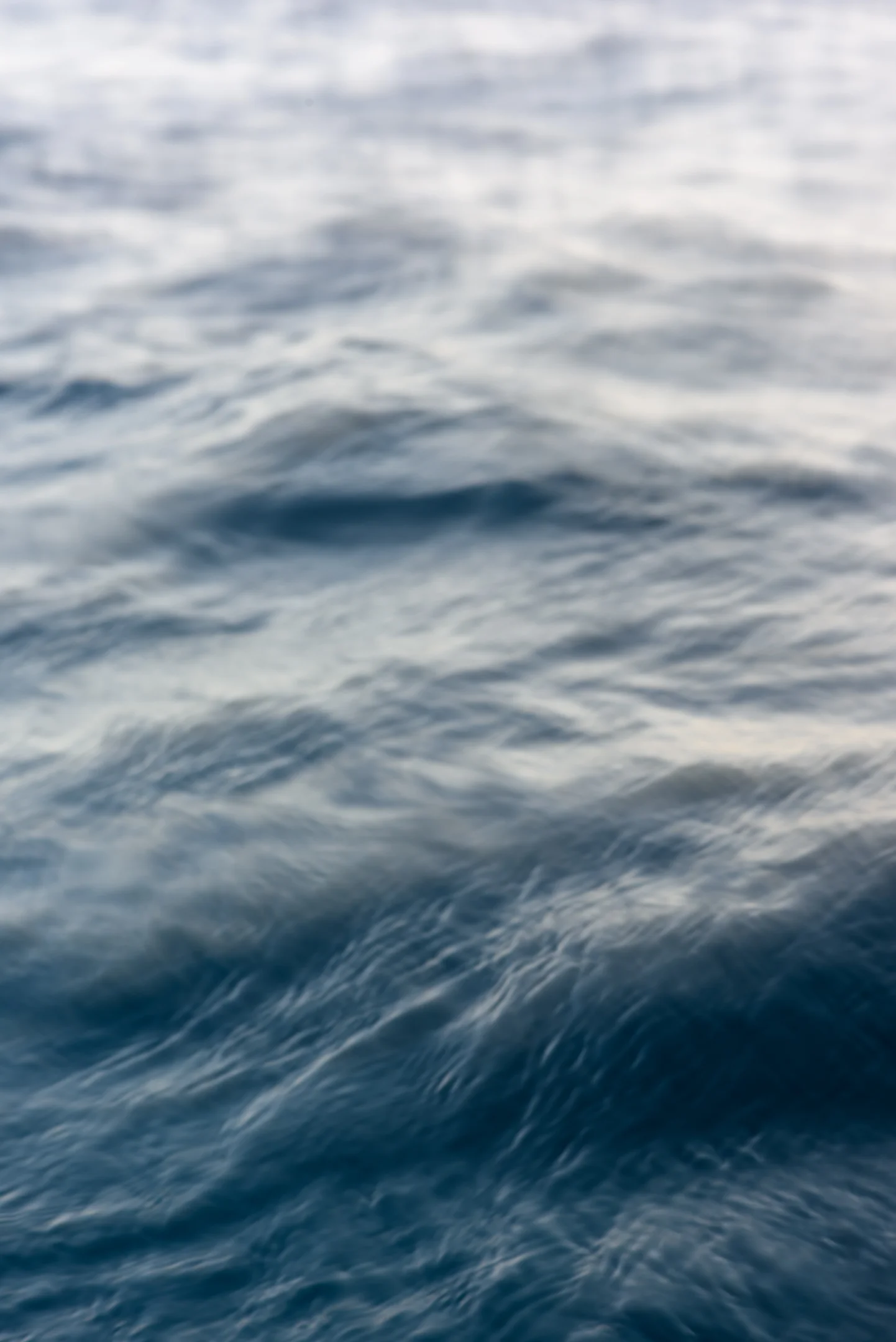
There’s something that dictates the process before any creative decision gets made. The world in front of the camera has three dimensions and keeps moving through time. The photograph has two dimensions and no time at all, no before or after, nothing beyond the four edges I chose. So the first thing a photograph does, before composition or feeling or anything else, is remove almost everything. It collapses a space you could walk through and a moment that was passing into something flat and still. That’s not a neutral act. It’s a large cut, and it happens the instant I decide where to point.
There’s a way of thinking about sculpture, often attributed to Michelangelo, that I find useful here. The figure was always inside the block of marble, the idea goes, and the work is simply cutting away everything that isn’t it. Nothing gets added to the stone. And framing works the same way. I’m not putting anything into the photograph. I’m removing what falls outside the edge, what happened before and after the instant. The making is in what I choose to leave.
And that choosing never really stops. Where to stand. How long to wait. When to press. What to keep of what came back. How to work it afterward. What to finally show. The authorship is distributed across all of those moments, not concentrated in one. When the light shifts or someone unexpected enters the frame, the picture wasn’t decided at the shutter, so what arrives uninvited is just more material. You fold it in, or not.
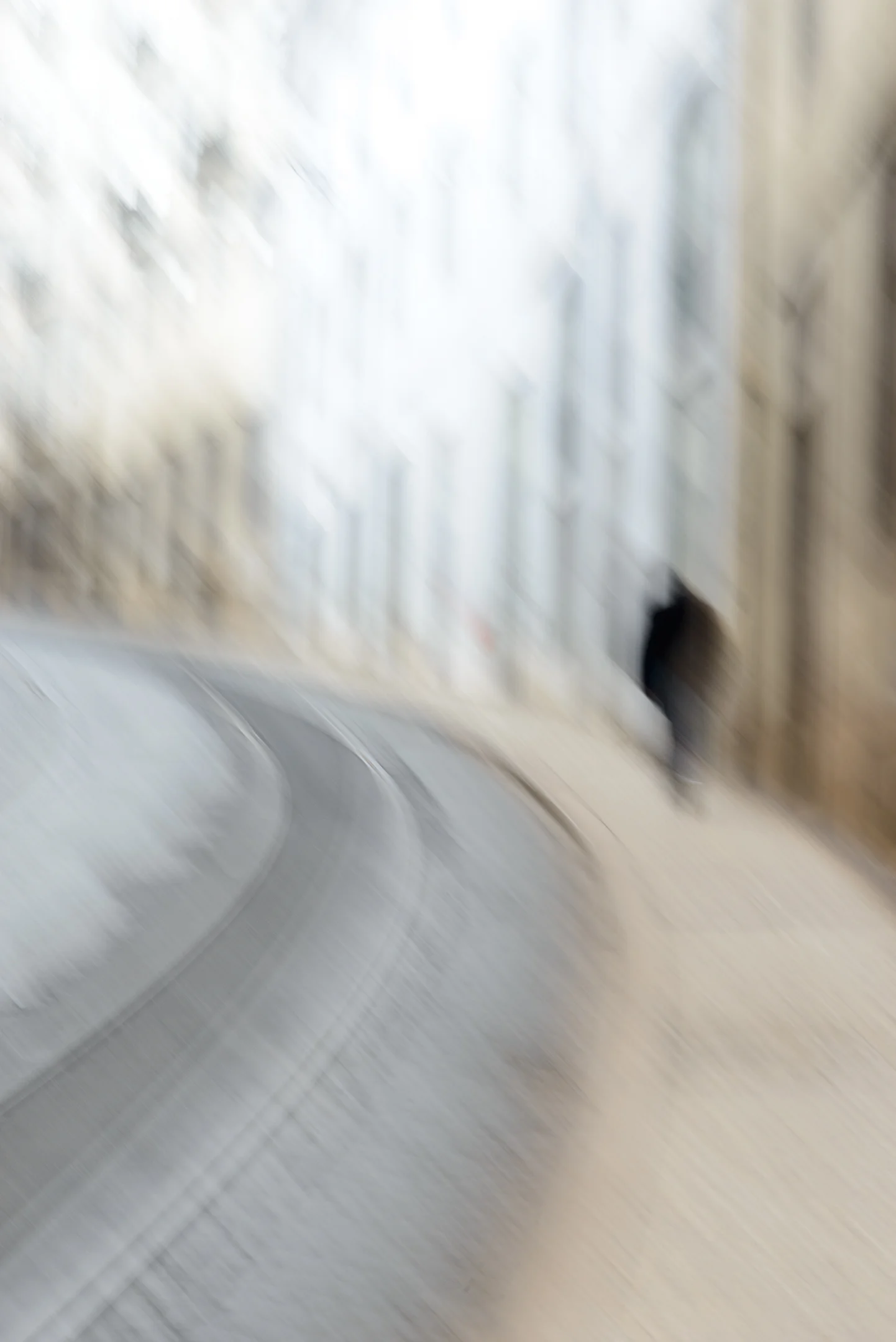
I’ve noticed that whatever the subject, what draws me is rarely the thing itself as it presents itself. It can be a busy street or open water, a city at night or a sky emptied of almost everything. What stays consistent is the pull toward finding a structure or harmony within it, something that isn’t immediately legible, that doesn’t just sit there and announce itself. Photography keeps pulling me toward that threshold, where direct depiction runs out and whatever the image becomes stems from how I chose to see, not just from what was conveniently there.
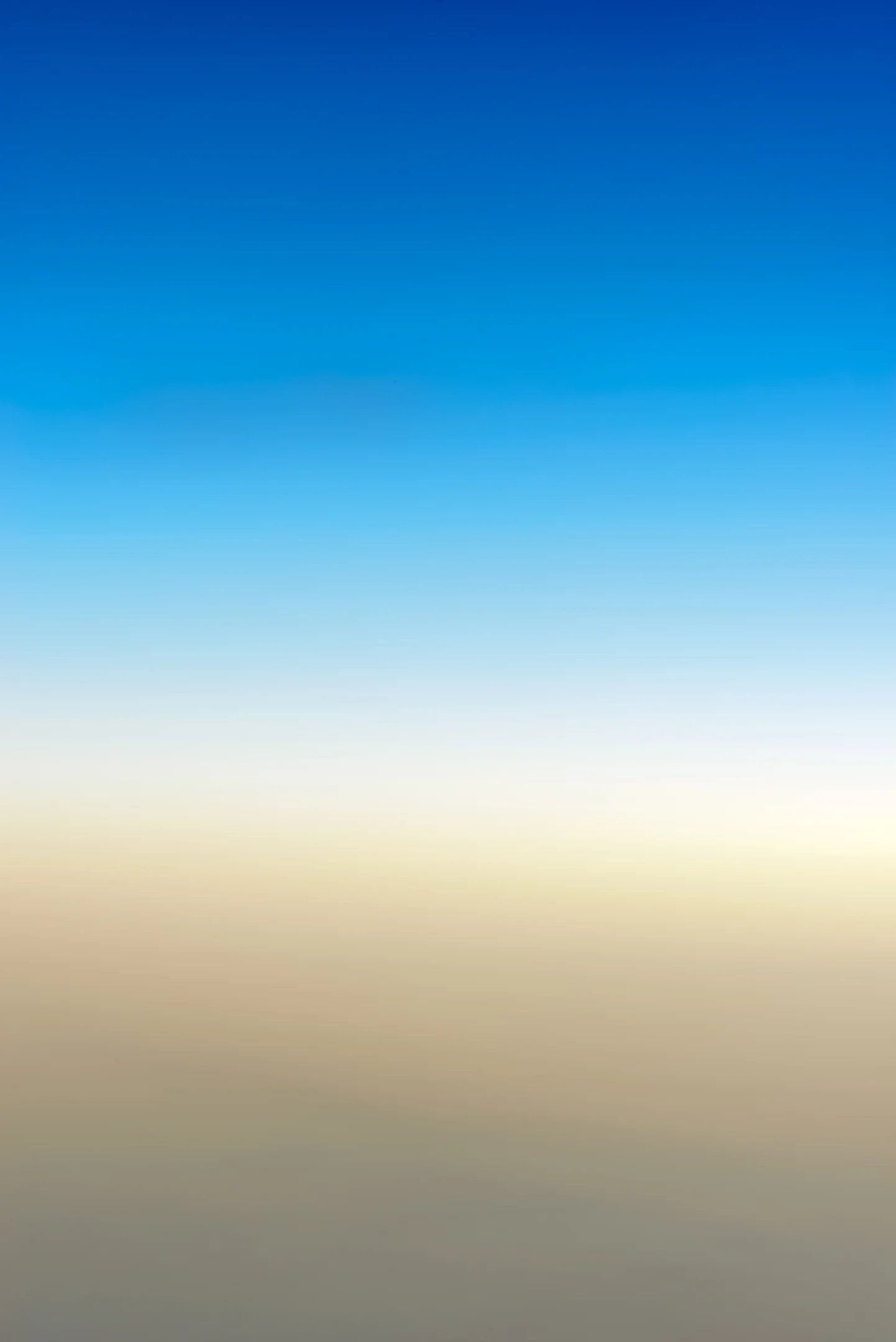
I don’t control what’s in front of me, and I’ve made a kind of peace with that. The light does what it does. The street holds whatever it holds that day. I reach for control in most other parts of my life, and photography has been the place where I’ve learned to let the world refuse me. What took longer to understand is that the refusal doesn’t diminish the authorship. If anything it’s the condition of it. If I arranged everything in advance, there would be nothing left to find a perspective on, only instructions to carry out.
What I bring is my own way of seeing, and what making actually is, at its most basic, is the act of pushing that private perception into something another person can stand in front of. Everyone moves through the world forming their own view of it, their own sense of what a moment holds or what a place feels like. What’s specific to making something is the externalising of it, giving it a form that exists outside your own head. When someone tells me they’d never seen a place that way, or that it opened up a perspective they hadn’t considered, that’s what I’m after. And if a print on a wall can keep doing that quietly over time, so much the better.
Looked at this way, finding and making start to look less like opposites. Finding relates to the taking side of things, something already out there, not mine to invent. But by the time I’ve chosen where to stand, what to keep, what to finally show, something exists that didn’t before. Finding and making don’t happen in sequence. They run together all the way through. Which is probably why the distinction between taking and making a photograph stayed with me. Not as a correction, but as a more honest description of what was always happening. The light does what it does, the world holds what it holds. My part is the seeing, and the choosing what to do with it. Not extracting something from the world, but building something from it, quietly, in the choosing.
If you’d like to see the work, browse the gallery.
If you’d like to start collecting, sizes and prices are on the Prints & Pricing page.